

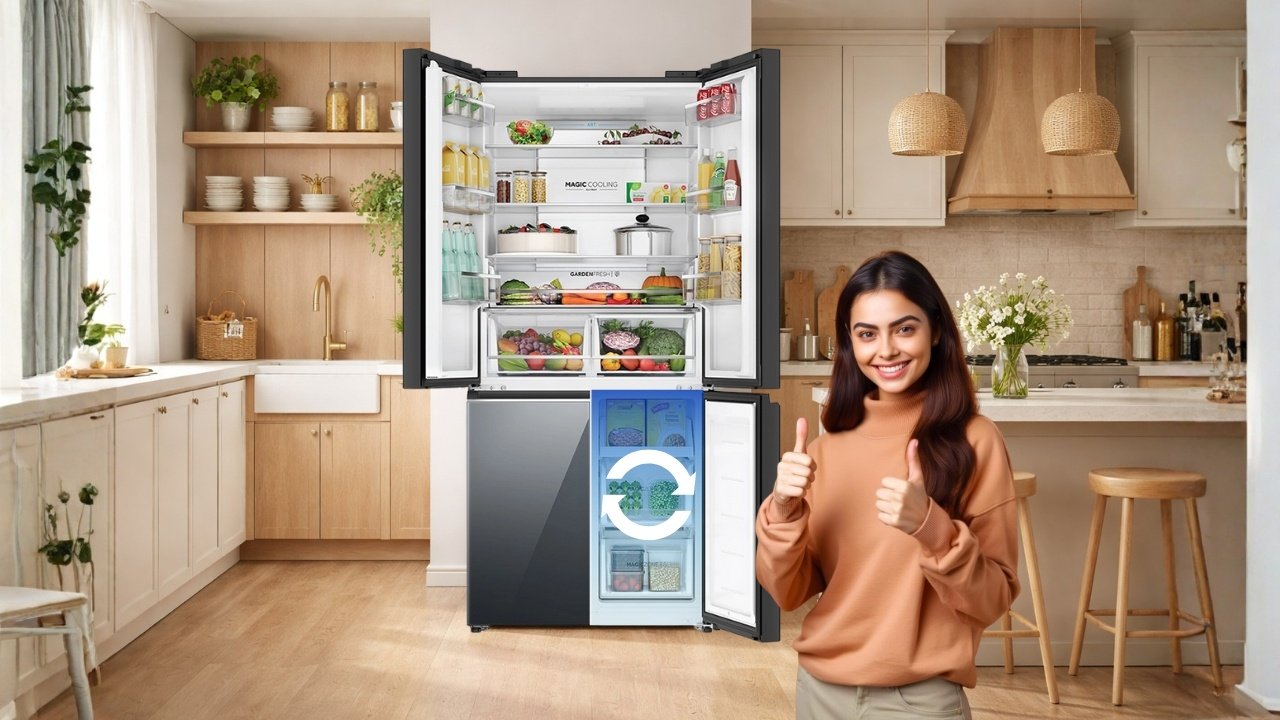
Traditional refrigerators are losing their grip on modern kitchens. For decades, households were bound to a rigid, fixed-capacity 70:30 fridge-to-freezer ratio. However, a major shift in urban lifestyles—characterized by weekly bulk grocery shopping, batch meal prepping, and dynamic hosting needs—has turned convertible refrigerators from a luxury tech gimmick into a viral kitchen staple.
What is a Convertible Refrigerator?
A convertible refrigerator features flexible cooling zones that allow you to convert the freezer compartment into additional fresh-food fridge space at the push of a button. By using advanced independent airflow channels and adaptive inverter compressors, these appliances let you customize your storage space dynamically based on your immediate needs.
The Driving Forces Behind the Trend
-
Changing Grocery Habits: Most urban households have ditched daily market trips for weekly online deliveries or supermarket hauls. Fresh-food sections fill up instantly, while freezers often sit half-empty. Conversion tech instantly balances this space.
-
Seasonal Dynamic Demands: Summer requires a massive influx of space for cold drinks, fruits, melons, and curd. Festive seasons demand sudden real estate for large cooked dishes and desserts. Convertible units adapt to these waves without requiring a larger appliance footprint.
-
Food Waste Prevention: Overstuffing a traditional fridge chokes internal airflow, creating uneven cooling pockets that cause fresh produce to spoil prematurely. Expanding the cooling area improves ventilation and extends food freshness.
-
Intelligent Power Management: Most modern convertible units feature specialized energy-saving modes (like Vacation Mode, Home Alone Mode, or Seasonal Cooling). When you travel or have less food to store, you can power down or lower the cooling intensity in specific zones to slash monthly utility bills.
Top 5 Convertible Refrigerators for Every Budget (2026 Models)
| Model | Capacity & Energy | Key Highlight | Best For | Price Range |
| Samsung Double Door (RT40H28U3THL) |
236 L 3 Star |
All-Round Cooling & Easy Slide Shelf; very balanced power consumption (200 kWh/year). | Small to medium families looking for standard reliability. | ₹28,490 – ₹28,990 |
| LG Smart Inverter (GLT2526XWEL) |
251 L 2 Star |
Multi Air Flow with dedicated Smart & Dairy Modes; Express Freeze function. | Fast cooling and organized dairy/fresh item placement. | ₹28,990 |
| Bosch 6-in-1 (CTC27U12VI) |
243 L 2 Star |
6-in-1 Versatile Modes; VitaFresh technology and an impressive 18-hour cooling retention during power cuts. | Best Value for Money; areas facing frequent power outages. | ₹26,990 |
| Samsung Inverter (RT40H30U3THL) |
256 L 3 Star |
Digital Inverter Compressor paired with robust stabilizer-free operations. | Households wanting low operating noise and reliable performance. | ₹31,690 |
| LG High-Capacity (GLT3426SNDS) |
343 L 2 Star |
Spacious storage layout with Auto Smart Connect and solar inverter compatibility. | Large families or those who prefer heavy bulk-buying. | Check Latest Price |
Essential Buying Checklist
Before upgrading your kitchen, keep these five crucial metrics in mind to find your perfect match:
-
Conversion Speed: Check how quickly a model can transition a zone from freezing to refrigeration temperatures (premium models can achieve this in under 80–90 minutes).
-
Odour Control Barriers: Ensure the unit uses a dual or triple evaporator system so that food aromas from the converted freezer section don’t transfer to your regular fresh food.
-
Compressor Type: Insist on a variable-speed digital or smart inverter compressor. They self-adjust to cooling demands, minimizing noise and maximizing durability.
-
Yearly Power Metrics: Do not look only at the star rating. Compare the listed Annual Energy Consumption (kWh/year) to calculate accurate long-term operational costs.
