

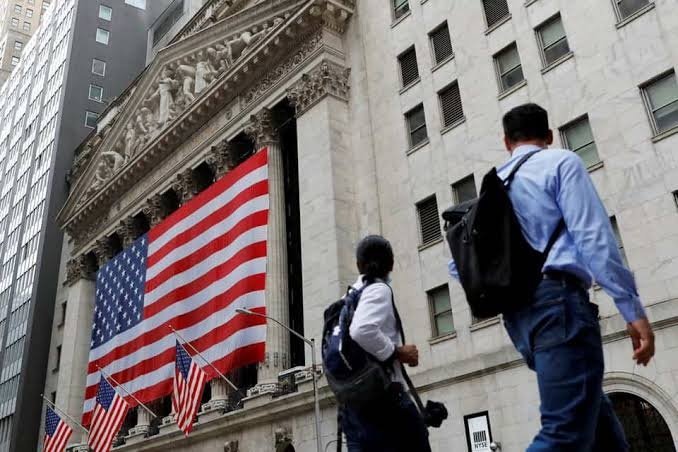
U.S. financial markets are taking a breather as stock and bond markets shut down on Friday, July 3, in observance of the Independence Day holiday. Because the traditional July 4th holiday falls on a Saturday this year, Wall Street is following standard market convention by observing it a day early, giving investors a long three-day weekend.
Major trading floors, including the New York Stock Exchange (NYSE) and the Nasdaq, will remain completely closed. The U.S. bond market also locked up early on Thursday afternoon at 2 p.m. Eastern Time. Regular trading across all equity and debt platforms is scheduled to resume on Monday, July 6.
Mixed Signals on Wall Street Before the Break
Before heading into the holiday weekend, major U.S. indexes delivered a mixed performance on Thursday. The Dow Jones Industrial Average managed to book a fresh record closing high, fueled by a weaker-than-expected government jobs report that eased investor fears over immediate interest rate hikes.
On the flip side, the tech-heavy Nasdaq Composite felt the weight of a continued slide in semiconductor stocks, while the benchmark S&P 500 hovered flat to finish the session nearly unchanged.
Cooling Labor Market Eases Pressure on Interest Rates
The focus of the trading week was the U.S. nonfarm payrolls report, which revealed that the American economy added just 57,000 jobs last month. This came in significantly lower than the 110,000 jobs Wall Street economists had initially projected. Meanwhile, the national unemployment rate settled at 4.2%, slightly better than the estimated 4.3%.
When combined with downward adjustments to hiring numbers from the previous two months, the data confirms that U.S. hiring noticeably cooled in June. This cooling trend immediately pushed back expectations for when the Federal Reserve might raise interest rates. Market data shows investors are now pricing in a potential rate hike much later in the year—shifting expectations to December instead of October. In response to the data, short-term Treasury yields dropped and the U.S. dollar softened.
Federal Reserve Chairman Kevin Warsh noted earlier in the week that price risks have started to ease, though he emphasized that the central bank remains firmly committed to bringing inflation down to its 2% target. While the Fed chose to hold interest rates steady at its last meeting, policymakers have indicated they still support rate hikes later this year if inflation remains stubborn.
Closing Bell Numbers and Corporate Highlights
By Thursday’s close, the Dow Jones Industrial Average surged 594.83 points, or 1.14%, to finish at 52,900.07. This milestone marked the Dow’s fourth consecutive week of gains, securing its longest winning streak since October 2024. The S&P 500 flatlined, gaining a mere fraction of a point to end at 7,483.24, while the Nasdaq Composite shed 207.36 points, or 0.80%, to finish at 25,832.67.
Despite Thursday’s mixed results, all three major indexes locked in a winning week. The Dow rose about 2%, the S&P 500 added 1.8%, and the Nasdaq advanced 2.1% over the course of the week.
In corporate news, Tesla shares fell 7.5% as investors took profits, despite the electric vehicle pioneer reporting second-quarter vehicle deliveries that beat market estimates. Software firm Bending Spoons also hit a rough patch, tumbling 11.3% just a day after its newly acquired video platform, Vimeo, enjoyed a massive 40% surge during its Nasdaq debut.
