

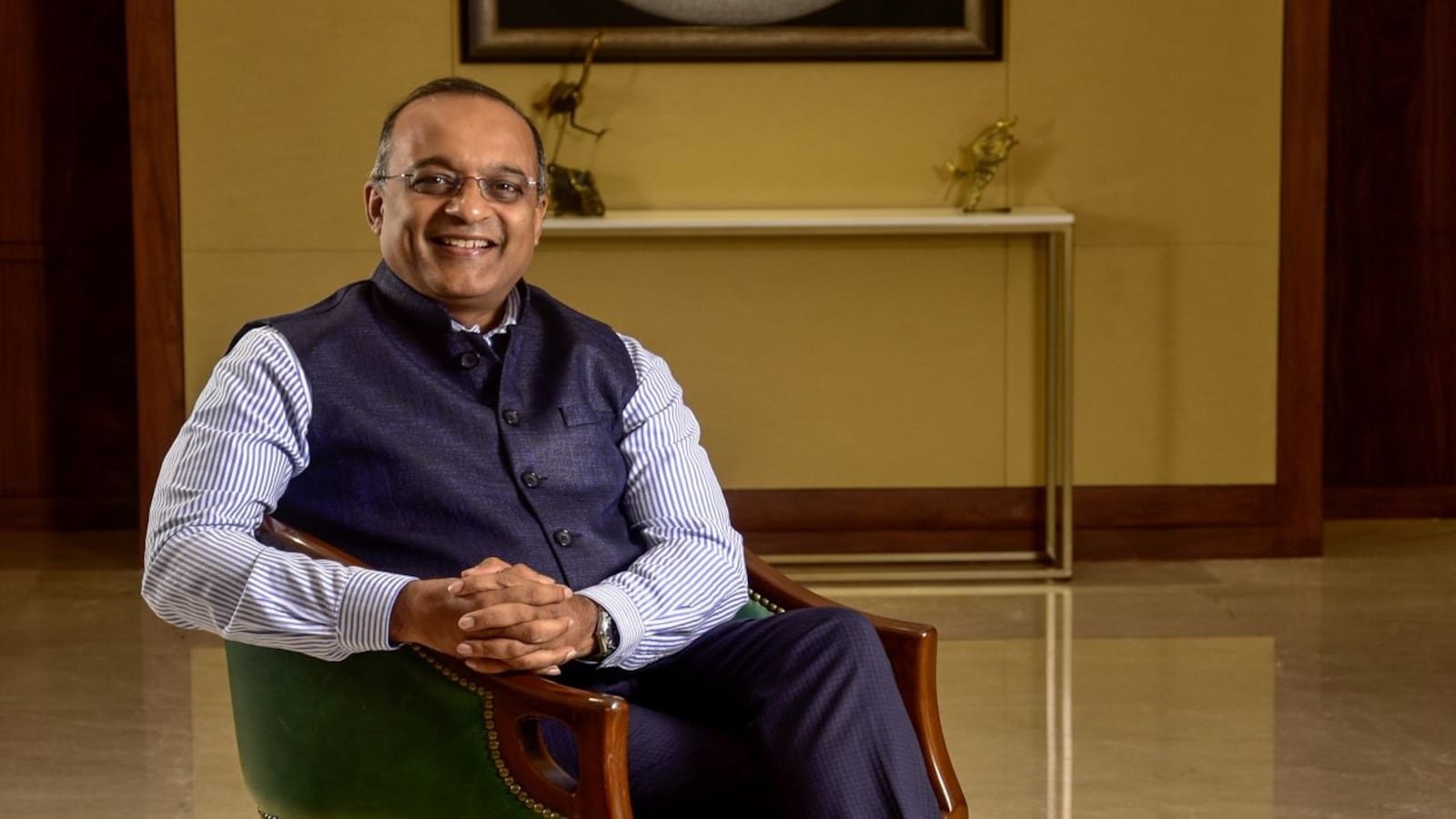
HDFC Bank Managing Director and Chief Executive Officer Sashidhar Jagdishan on Saturday addressed the bank’s shareholders in the fiscal year 2026 annual report, directly confronting the fallout from the sudden resignation of former part-time chairman Atanu Chakraborty. Jagdishan described the sudden departure in March 2026 as a “challenging event” that cast an unexpected spotlight on the internal corporate governance standards of India’s largest private lender.
The bank moved aggressively over the summer to clear its name, hiring a pair of prominent domestic and international law firms to investigate the former bureaucrat’s parting allegations. On Saturday, Jagdishan confirmed that the exhaustive multi-month audit concluded there was absolutely “no basis” to the ethical concerns raised by Chakraborty.
A Timeline of the Boardroom Crisis
The friction within HDFC Bank’s top leadership structure escalated rapidly over a four-month period, dragging in high-profile legal advisors and prompt regulatory interventions from the Reserve Bank of India (RBI).
[March 17, 2026: The Resignation]
Chairman Atanu Chakraborty abruptly resigns, citing
internal “happenings and practices” incongruent
with his values. HDFC ADRs drop 8%.
│
▼
[March 19, 2026: Swift Leadership Reset]
HDFC Bank secures RBI clearance to name group insider
Keki Mistry as interim chairman to stabilize markets.
│
▼
[April–June 2026: The Legal Audit]
Board hires Wilson Sonsini (US) & Wadia Ghandy (India)
to scan two years of records and interview executives.
│
▼
[June 26, 2026: The Exoneration]
Law firms declare “no basis” for allegations.
Chakraborty refuses to participate in the probe.
│
▼
[June 29, 2026: New Chairman Appointed]
Former Chief Election Commissioner Rajiv Kumar taking
over as permanent part-time chairman.
Inside the Dual-Continent Investigation
Because HDFC Bank maintains American Depositary Receipts (ADRs) listed on the New York Stock Exchange, the board chose to execute a comprehensive, cross-border corporate governance assessment rather than relying solely on local oversight. The independent inquiry was handed to:
-
Wilson Sonsini Goodrich & Rosati (United States legal counsel)
-
Wadia Ghandy & Co. (Indian domestic legal counsel)
To protect the absolute integrity of the investigation, the bank formed a specialized committee consisting exclusively of independent directors to oversee the workflow.
According to Jagdishan, the external attorneys parsed massive amounts of corporate communications, compliance records, and official board minutes spanning the two years prior to the resignation. The legal teams also conducted intensive personal interviews with every single independent director on the board, alongside top business management leaders and the heads of internal control and assurance systems.
The Root Disagreement: “Mis-selling” vs. “Superfluous Exercise”
The public battle stems from Chakraborty’s post-resignation statements. While he refrained from detailing his concerns in his initial letter, he later appeared on national television to target the bank’s marketing behavior. Specifically, he pointed to public controversies regarding the alleged “mis-selling” of Credit Suisse’s high-risk perpetual bonds via the bank’s overseas operations in Dubai.
Chakraborty also publicly criticised the bank’s post-merger commercial trajectory, noting that the expected structural benefits of the historic $40-billion HDFC Ltd. integration were yet to fully materialize, alongside compressed net interest margins and sticky cost-to-income metrics.
However, the legal probe ran into a major roadblock when Chakraborty completely refused to sit down for an interview with the investigators. Speaking with the media, the former chairman dismissed the entire dual-firm probe as a hollow compliance chore.
“I asked the bank for the terms of reference at least five or six times, but to no avail. I do not crave the certificate of an external agency. Appointing external law firms, including an American one, was just a compliance exercise. Jamie Dimon [chairman and CEO of JPMorgan Chase] would not have come to an Indian law firm.”
— Atanu Chakraborty, Former HDFC Bank Chairman
Rajiv Kumar Takes the Helm
With the internal legal probe finalized and filed, HDFC Bank is looking to pivot to long-term operational stability under its newly appointed permanent part-time chairman, Rajiv Kumar.
Kumar, a veteran policymaker who previously served as India’s Chief Election Commissioner and Financial Services Secretary, officially assumed the role on June 29. CEO Jagdishan closed his letter to stakeholders by expressing immense confidence in the transition, highlighting that Kumar’s “transformational role in revitalising the banking and financial services sector” makes him uniquely qualified to lead the board through its next post-merger growth cycle.
