

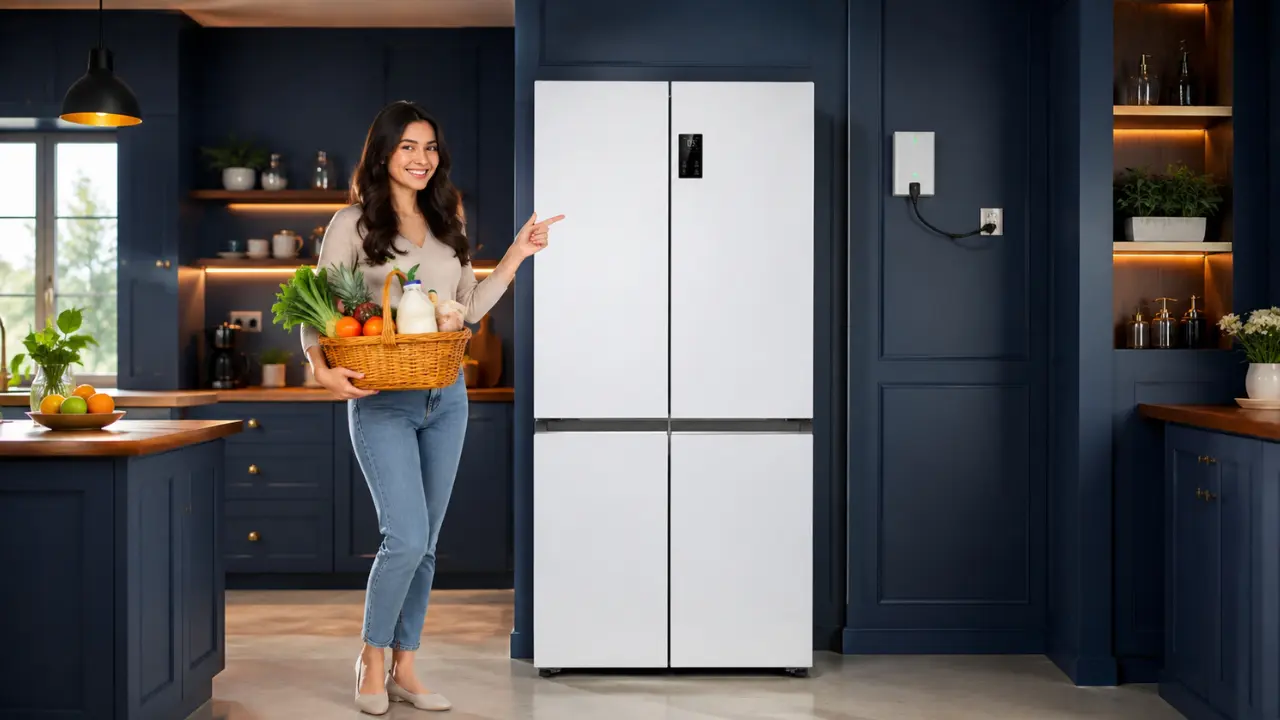
Most people view refrigerators as quiet appliances running in the background with minimal impact on monthly power bills. However, upgrading from a conventional fixed-speed model to an inverter refrigerator can deliver a surprisingly large reduction in electricity costs.
How Inverter Compressors Save Electricity
The key difference lies in how the compressor operates:
-
Conventional Compressors: Operate at a single fixed speed, switching completely on when cooling is required and turning off once the set temperature is reached.
-
Inverter Compressors: Continuously adjust their motor speed based on cooling demand. Instead of cycling on and off repeatedly, they run continuously at lower speeds once the target temperature is reached, drastically cutting energy spikes.
Key Factors Beyond the “Inverter” Label
Simply having an inverter compressor does not automatically make a refrigerator low-energy. True efficiency depends on capacity, insulation, ambient temperature, usage habits, and official ratings.
-
Check the BEE Star Rating: The Bureau of Energy Efficiency (BEE) rates appliances on a 1-to-5 star scale. Higher star ratings signal better energy performance within a specific size category.
-
Focus on Annual Energy Consumption (kWh): Look at the total units consumed per year on the BEE label rather than relying solely on marketing claims.
-
Compare Similar Capacities: Larger fridges require more power to cool, so compare annual energy consumption figures between models of similar size.
Top Recommended Inverter Models
| Model | Capacity | Energy Rating | Annual Consumption | Key Advantage |
| Whirlpool 207 L Icemagic Pro | 207 L | 5 Star | 117 kWh/year | Ultra-low energy use, 7-day freshness design |
| LG 201 L Direct-Cool | 201 L | 5 Star | Not specified | Smart Inverter, convenient base stand drawer |
| Samsung 236 L Double Door | 236 L | 3 Star | 200 kWh/year | Digital Inverter with convertible freezer mode |
| Whirlpool 235 L Frost-Free | 235 L | 3 Star | Not specified | Intellisense inverter, rapid cooling down to -24°C |
| LG 251 L Double Door | 251 L | 1 Star | 268 kWh/year | Spacious 251L capacity with Multi-Air Flow |
Best Practices to Lower Power Consumption
-
Maintain proper ventilation space around the sides and back of the fridge.
-
Keep door gaskets clean and inspect seals periodically to prevent cold air leaks.
-
Avoid placing hot food inside, and minimize unnecessary door openings.
-
Keep the temperature at a moderate setting rather than the maximum cold setting.
While replacing a functional, working refrigerator purely for energy savings may not offer an immediate payback, choosing a high-star inverter model during a scheduled upgrade provides substantial long-term savings on a 24/7 appliance.
