

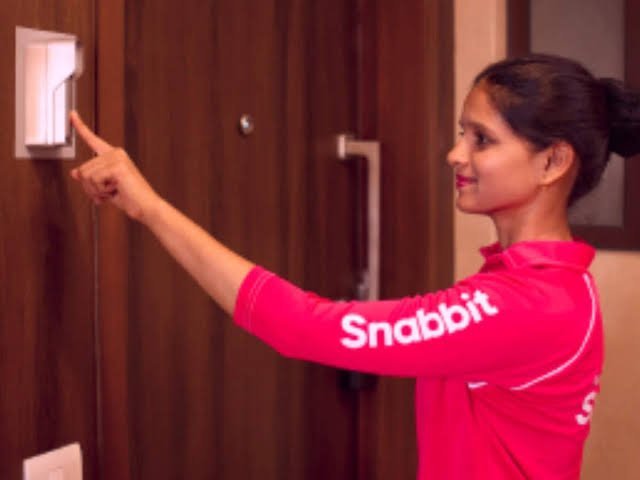
India’s instant househelp startups are scaling at breakneck speed, drawing millions of bookings by offering low-cost, on-demand domestic services. However, a closer look at the financial metrics reveals a glaring reality: the math behind the 10-minute domestic help boom simply doesn’t add up yet.
Major players like Snabbit and Urban Company’s InstaHelp are prioritizing aggressive expansion and user acquisition over near-term profitability. But the heavy cash burn required to build this daily habit is raising serious questions about the long-term viability of the model.
1. The Low Entry Price vs. The Profitability Gap
The core appeal of these platforms is convenience paired with ultra-cheap pricing—often starting around ₹100 or lower. However, low introductory prices create a severe unit economics challenge:
-
Falling Average Order Values (AOV): Urban Company noted that InstaHelp’s post-discount average order value dropped from ₹134 to ₹118 in a single quarter due to aggressive introductory discounts.
-
The Break-Even Hurdle: Industry estimates indicate that platforms need an average order value of around ₹300 to reach a break-even point—leaving a massive gap between current pricing and sustainable margins.
-
The Discount Trap: Customers are rapidly being trained to expect cheap, instant help. If platforms try to raise prices too quickly to improve margins, they risk losing price-sensitive users to competitors still willing to subsidize the service.
2. Staggering Financials and High Cash Burn
The financial statements of top contenders highlight just how expensive it is to scale an on-demand household network:
-
Snabbit’s Heavy Spending: Snabbit reported spending ₹195 crore in FY26 against an operating revenue of just ₹12.2 crore, resulting in a net loss of ₹168 crore. Major cost drivers included expert service expenses (₹63.1 crore), marketing (₹48.7 crore), and employee benefits (₹46 crore).
-
Industry-Wide Burn: Combined monthly cash burn for the leading platforms has hovered between $16 million and $17 million, reflecting that rapid top-line growth is coming at an extraordinary capital cost.
-
The Capital Runway: While well-established players like Urban Company can cushion instant-help losses using profits from their legacy home-services business and fresh capital injections, standalone startups face intense pressure to prove their unit economics before investor patience runs out.
3. Operational Density and the Challenge of Utilization
Unlike traditional software marketplaces, instant househelp platforms face intense logistical bottlenecks:
-
Geographic Density: To deliver help within minutes, a platform must maintain a dense supply of workers scattered across various micro-markets.
-
Idle Time Costs: Workers who travel between bookings or sit idle waiting for assignments add direct operational costs without generating revenue.
-
Expansion Costs: Scaling into new neighborhoods requires heavy upfront spending on worker acquisition and local marketing before demand becomes predictable. While Snabbit expanded its footprint from 8 micro-markets to over 100, each new pocket requires continuous capital infusion to remain active.
4. Daily Habit or Emergency Backup?
Perhaps the biggest strategic unknown is customer retention over the long term:
-
Occasional vs. Routine Use: Right now, many households use instant-help apps as an emergency backup when their regular domestic help takes a day off.
-
The Retention Test: For the business model to succeed, users must transition from treating the app as an occasional convenience to incorporating it into their daily routines at normal, non-subsidized prices.
The Road Ahead
The 10-minute domestic service boom has successfully captured consumer imagination, driving millions of monthly orders across urban centers. However, scale alone will not fix the underlying unit economics. For the industry to survive beyond the funding hype, these platforms must prove that urban households are genuinely willing to pay sustainable, full-cost prices for instant convenience.
