

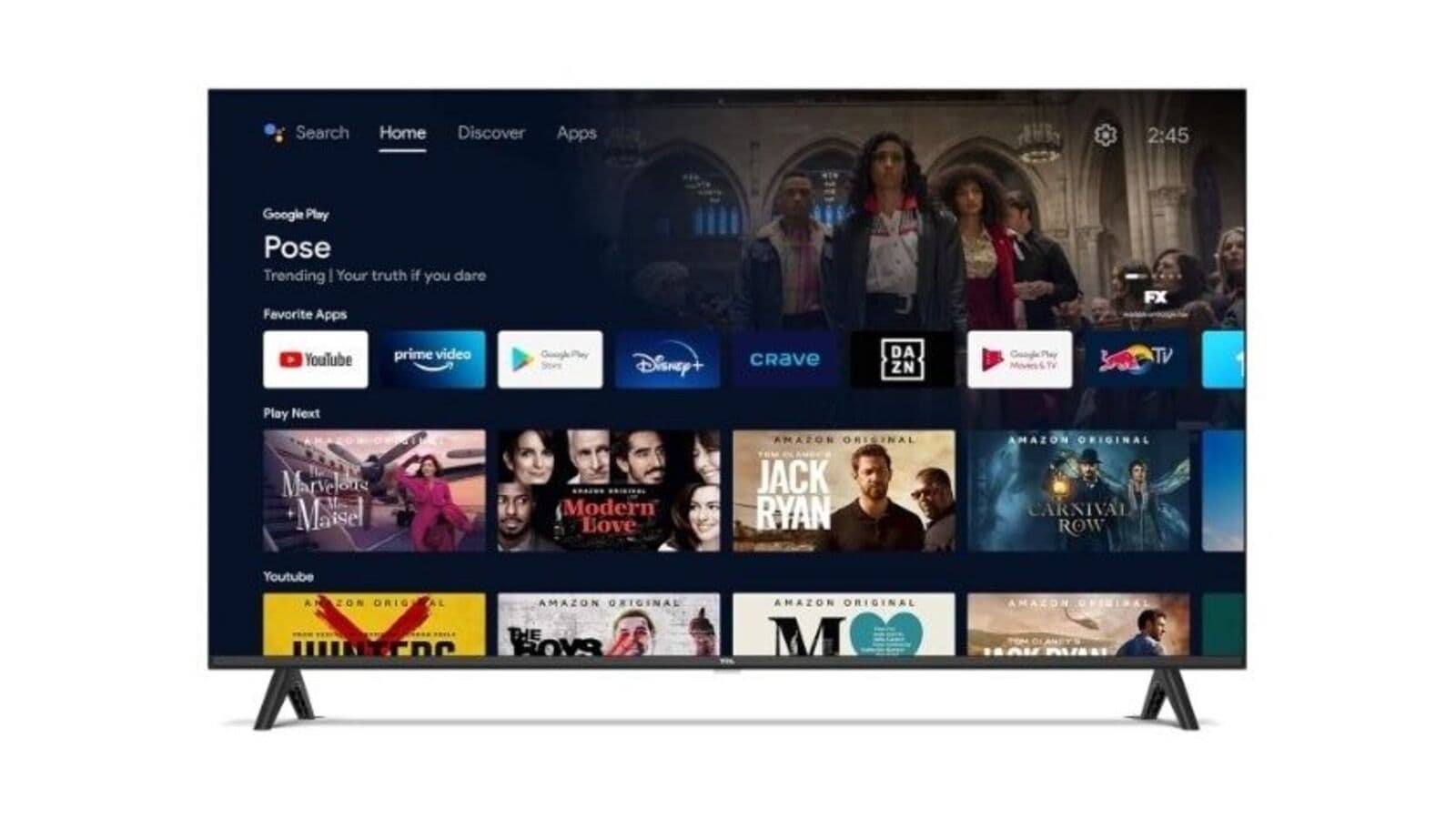
While large 4K screens dominate living rooms, the 32-inch category remains a versatile choice for bedrooms, compact apartments, and home offices. Today’s 32-inch televisions feature improved display technologies, faster processors, and refined operating systems.
Key Market Highlights
-
Display Evolution: Most budget models retain HD-Ready (768p) resolution, but newer Full HD (1080p) and QLED options offer sharper visuals, higher contrast, and vibrant colors.
-
Smart Platforms: Operating systems vary widely—Google TV provides extensive app support and recommendations, LG’s webOS offers clean navigation, and Samsung’s Tizen OS delivers smooth connectivity.
-
Audio Upgrades: Audio output generally ranges from 20W to 30W, with platforms like Dolby Audio and DTS Virtual:X helping simulate surround sound in smaller rooms.
Top Standout Categories
| Category | Typical Specs | Key Strengths |
| QLED Compacts (e.g., TCL V5C, realme TechLife) | HD Ready / Full HD, Quantum Dot panel, Google TV | Superior color volume, better brightness, rich app integration. |
| Full HD Veterans (e.g., LG LB / LR Series) | 1080p Resolution, webOS, Alpha AI processing | Crisp text and details, balanced color accuracy, robust build quality. |
| Budget Workhorses (e.g., Xiaomi F/A Series, Samsung Tizen) | HD Ready, Fire TV / Tizen / Android TV, 20W Dolby Audio | High value-to-price ratio, intuitive casting, reliable daily performance. |
What to Look For Before Buying
-
Resolution vs. Viewing Distance: If sitting closer than 5 feet, a Full HD (1080p) panel yields noticeably sharper text and images. Beyond 6 feet, HD-Ready (768p) is sufficient for standard streaming.
-
Connectivity Essentials: Ensure the TV offers at least 2 HDMI ports and 1–2 USB ports to comfortably connect a set-top box, gaming console, or external storage alongside built-in Wi-Fi and Bluetooth.
-
Sound Capabilities: For casual viewing, 20W output is the baseline. Look for Dolby Audio processing if you prefer clearer dialogue without needing an external soundbar.
