

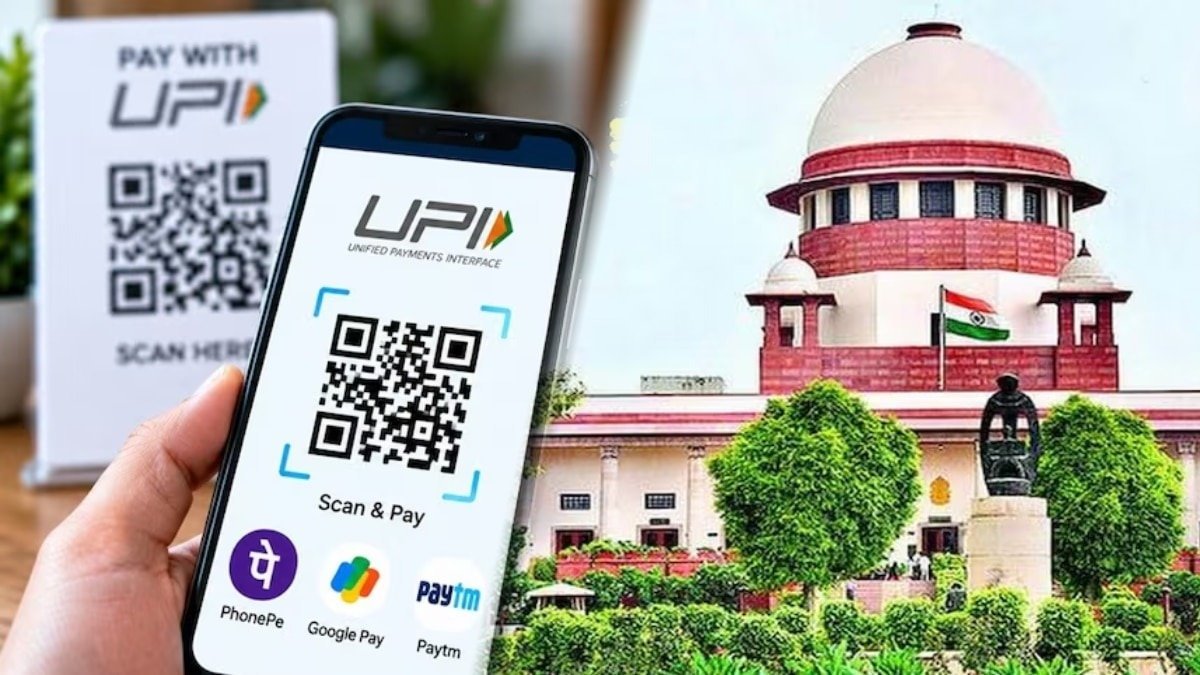
The Supreme Court of India declined to grant an interim stay on the newly announced Merchant Discount Rate (MDR) framework for Unified Payments Interface (UPI) transactions, allowing the system to proceed toward its scheduled implementation date.
Here are the key details surrounding the Supreme Court proceedings and the new framework:
Supreme Court Proceedings
-
Bench and Notices: A three-judge bench led by Chief Justice Surya Kant, alongside Justices Joymalya Bagchi and V. Mohana, heard a Public Interest Litigation (PIL) filed by advocate Anjan Datta. The court issued formal notices to the Union Government, the Reserve Bank of India (RBI), the National Payments Corporation of India (NPCI), and the UPI & Services Steering Committee, giving them four weeks to file counter-affidavits.
-
Questions on Legal Basis: During the hearing, the bench questioned the executive scope and statutory foundation of the levy, asking for clarification on the precise character of the charge since it is not government revenue or a conventional tax/fee.
-
Government Stance: Appearing for the Centre, Additional Solicitor General N. Venkataraman defended the move, stating that the fee acts as an internal settlement mechanism between banks and payment aggregators to sustain the infrastructure, and emphasized that approx. 96% of transactions will remain completely unaffected.
How the New UPI MDR Structure Works (Effective October 15, 2026)
The framework creates a tiered system that shields everyday consumer transfers and micro-merchants while applying charges to high-value commercial payments:
-
Person-to-Person (P2P) Transfers: Completely free, regardless of the transfer amount.
-
P2M Transactions up to ₹2,000: Free of MDR for customers and merchants alike.
-
Small Merchants: Businesses and street vendors receiving up to ₹1 lakh per month through UPI QR codes continue under a zero-MDR framework.
-
Standard Merchant Payments (> ₹2,000): Subject to a 0.4% MDR, which is capped at ₹300 for transactions of ₹75,000 and above.
-
Essential Sectors (Railways, Telecom, Insurance, Fuel, Agri-inputs): Attract a flat fee of ₹5 per transaction for amounts above ₹2,000.
-
Capital Markets (Mutual Funds, Stockbrokers): Charged at a lower rate of 0.02% (capped at ₹300).
The government and RBI maintain that the fee is restricted strictly to the merchant payment ecosystem and that banks have been instructed to ensure merchants do not pass these costs directly onto consumers.
