

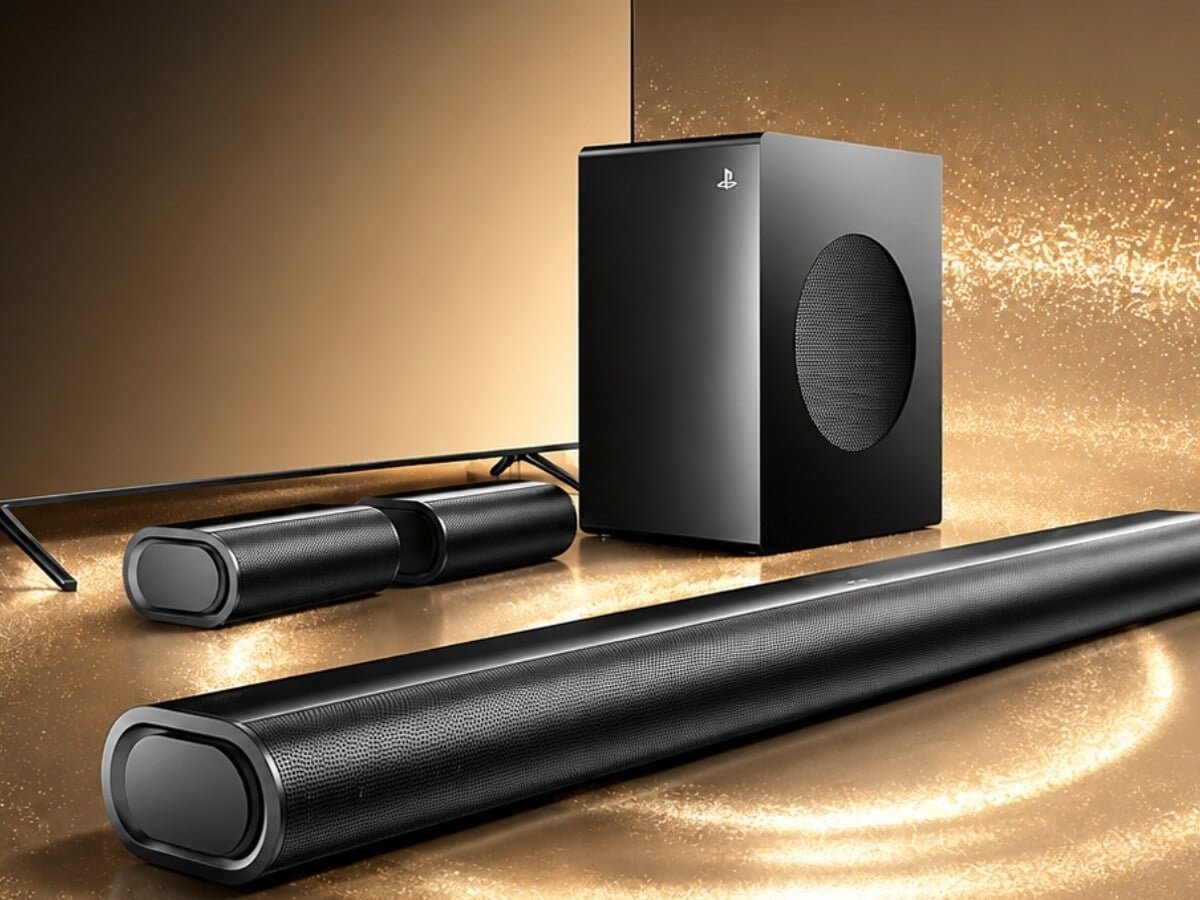
When upgrading a TV’s audio setup, Dolby Atmos has become the gold standard marketing term. However, seeing “Dolby Atmos” on a box does not guarantee the same acoustic experience across different models. Under ₹20,000, manufacturers package this immersive audio technology into vastly different hardware configurations—ranging from sleek 2.1 virtual systems to sprawling 5.2.2 setups complete with dedicated height drivers and physical satellite speakers.
Understanding how channel configurations, connectivity standards, and room layouts impact real-world performance is essential before investing your money. Here is an in-depth breakdown of five notable Dolby Atmos soundbars under ₹20,000 to help you decide which system best fits your living space, entertainment habits, and technical requirements.
1. Decoding Dolby Atmos: What Are You Actually Buying?
Before comparing specific models, it helps to understand what the channel numbers mean:
-
2.1 Systems (e.g., JBL Cinema SB190): Comprise a main soundbar and a subwoofer. These units rely on Virtual Dolby Atmos, utilizing digital signal processing (DSP) to create a sense of height and envelopment without physical upward-firing drivers or rear speakers.
-
5.1 / 5.2 Systems (e.g., boAt Aavante Prime, Noise Homestage 5.1): Add physical surround sound via rear satellite speakers. While they offer true directional audio around the listener, standard 5.1 layouts typically lack dedicated upward-firing height channels, handling overhead sounds through spatial mapping on horizontal drivers.
-
5.1.2 / 5.2.2 Systems (e.g., Zebronics Juke Bar 9775, Portronics Sound Slick X1): The most comprehensive setups in this price tier. They feature surround speakers, subwoofers (sometimes dual units), and dedicated height channels designed to bounce sound off your ceiling for genuine overhead Atmos effects.
2. Detailed Product Comparisons
boAt Aavante Prime 5.1 5000DA
-
Configuration: 5.1 Channel | Power Output: 500W RMS
-
Key Components: Soundbar, wired subwoofer, two wired satellite speakers.
-
Connectivity: Bluetooth v5.3, HDMI eARC, AUX, USB, Optical.
-
The Experience: This system is built for users who want physical surround presence without entering premium pricing tiers. Delivering a robust 500W output, it anchors movies and gaming with tangible rear-channel separation. HDMI eARC ensures high-bandwidth audio pass-through from compatible TVs.
-
Trade-offs: Because it lacks dedicated upward-firing height drivers, overhead Atmos effects are simulated. Additionally, managing wired connections for the subwoofer and rear satellites requires careful cable routing across your living room.
JBL Cinema SB190 Deep Bass
-
Configuration: 2.1 Channel | Power Output: 380W (Soundbar: 2x90W, Subwoofer: 200W)
-
Key Components: Low-profile soundbar, wireless 6.5-inch subwoofer.
-
Connectivity: Bluetooth v5.1, HDMI eARC, Optical.
-
The Experience: JBL takes a minimalist approach here. Rather than cluttering your room with wires and multiple speakers, the SB190 relies on a clean 2.1 layout with Virtual Dolby Atmos. A massive 200W wireless subwoofer punches well above its weight class for deep, theatrical bass, while a dedicated Voice Clarity mode makes dialogue crisp and intelligible—ideal for dialogue-heavy dramas and news viewing.
-
Trade-offs: You miss out on physical rear surround sound and dedicated height channels. Listeners seeking true 360-degree directional panning will find the virtual surround stage narrower than multi-speaker alternatives.
ZEBRONICS Juke Bar 9775
-
Configuration: 5.2.2 Channel | Power Output: 650W Total
-
Key Components: 5-driver soundbar, dual wireless subwoofers, two wired rear satellites.
-
Connectivity: Bluetooth v5.3, HDMI eARC, Optical, USB, AUX.
-
The Experience: For sheer hardware dominance under ₹20,000, the Juke Bar 9775 stands alone. Pumping out a massive 650W, it features a true 5.2.2 layout equipped with dedicated height drivers and dual subwoofers. This configuration fills large living rooms effortlessly, delivering room-shaking low frequencies and authentic overhead audio cues.
-
Trade-offs: This is a large, physically demanding system. It requires considerable space around your TV console, and the rear satellites still require wired connections and separate power adapters, making cable management a significant chore.
Noise Homestage 5.1
-
Configuration: 5.1 Channel | Power Output: 500W
-
Key Components: Soundbar, 6.5-inch wired subwoofer, two rear surround speakers.
-
Connectivity: Bluetooth v5.3, HDMI, USB, AUX.
-
The Experience: Noise’s entry into home audio focuses on straightforward, punchy living room performance. With 500W of power and dedicated EQ modes tailored for news, movies, and music, it provides a well-balanced acoustic profile out of the box. Physical rear speakers ensure traditional surround sound separation for cinematic sequences.
-
Trade-offs: Like the boAt alternative, it relies on wired rear speaker architecture. Advanced height channels are absent, meaning vertical sound localization is limited.
Portronics Sound Slick X1
-
Configuration: 5.1.2 Channel | Power Output: 600W
-
Key Components: Soundbar, wired subwoofer, wireless rear satellite speakers.
-
Connectivity: Bluetooth v5.3, HDMI ARC (not eARC), Optical, USB, AUX.
-
Trade-offs / Highlights: The Sound Slick X1 solves one of the biggest complaints of budget multi-speaker setups by utilizing wireless rear satellite speakers, drastically reducing cable clutter around your seating area. Backed by 600W output and a 5.1.2 channel layout with height capabilities, it balances immersive multi-speaker audio with modern convenience. However, it relies on standard HDMI ARC rather than eARC, which can occasionally compress uncompressed high-bitrate audio streams from external streaming boxes or Blu-ray players.
3. Summary Specification Matrix
| Model | Channel Config | Total Power | Subwoofer Type | Rear Speakers | Atmos Implementation | Best Suited For |
| boAt Aavante Prime 5000DA | 5.1 | 500W | Wired | Wired | Virtual/Spatial | Traditional surround lovers on a budget |
| JBL Cinema SB190 | 2.1 | 380W | Wireless | None | Virtual | Minimalist spaces & dialogue clarity |
| Zebronics Juke Bar 9775 | 5.2.2 | 650W | Dual Wireless | Wired | Dedicated Heights | Large rooms & maximum hardware power |
| Noise Homestage 5.1 | 5.1 | 500W | Wired | Wired | Spatial Mapping | All-purpose movie and music viewing |
| Portronics Sound Slick X1 | 5.1.2 | 600W | Wired | Wireless | Dedicated Heights | Clean setups wanting wireless rears |
4. Key Buying Factors to Keep in Mind
-
Room Layout & Cable Management: If you live in a compact room or despise visible wires running across your floor, a 2.1 system like the JBL SB190 or a wireless-rear setup like the Portronics Sound Slick X1 will save you aesthetic headaches. Multi-speaker wired rigs require planning for cable concealment.
-
Connectivity Standards (ARC vs. eARC): If you consume high-bitrate content via 4K Blu-ray players or lossless streaming services, prioritize models featuring HDMI eARC (such as the boAt, JBL, and Zebronics options) over standard ARC to prevent audio bottlenecks.
-
Primary Content Usage:
-
For movies and action games, systems with physical rear channels and height drivers (Zebronics, Portronics) deliver unmatched immersion.
-
For daily TV watching, news, and OTT series, a clean 2.1 setup with robust dialogue enhancement (JBL) often provides a cleaner, more trouble-free experience.
-
