

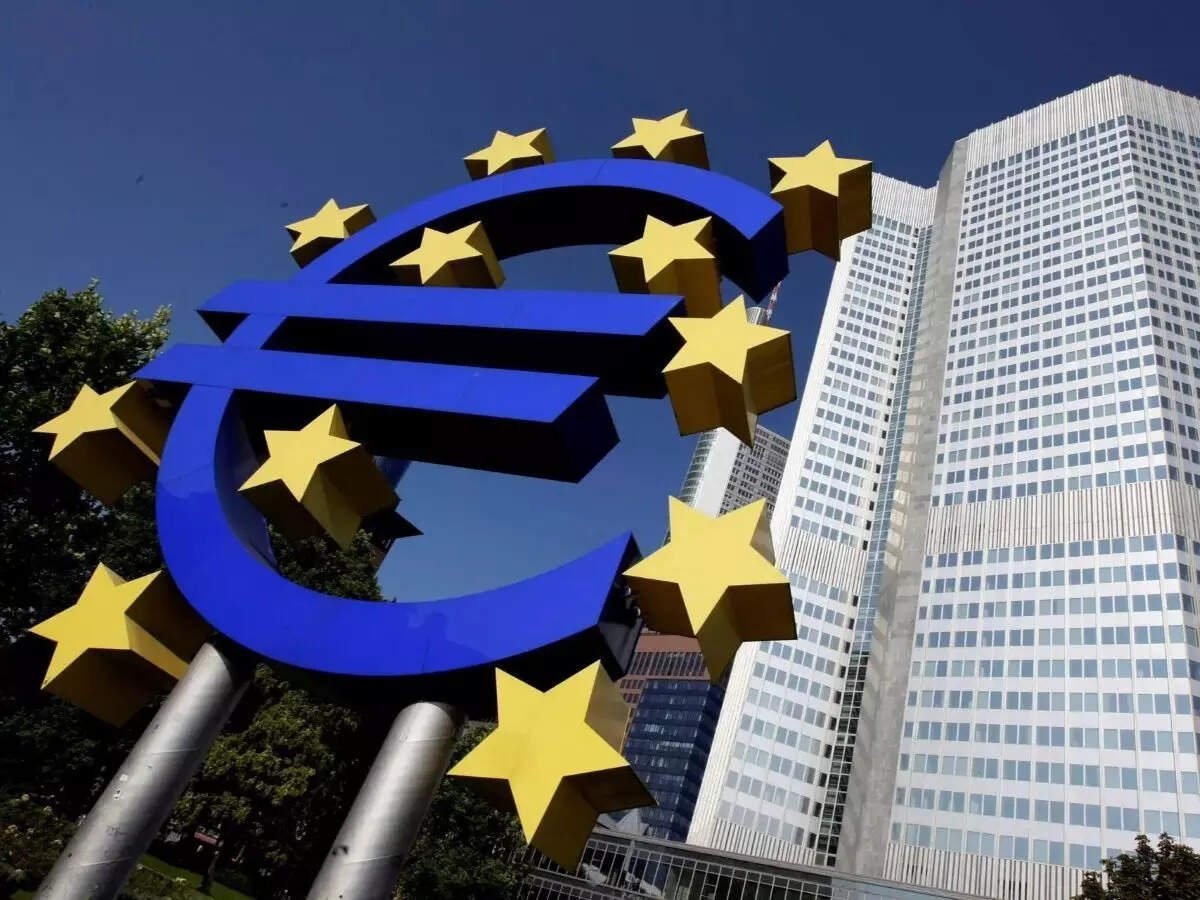
In a major monetary policy shift, the European Central Bank (ECB) raised its benchmark interest rates by 25 basis points (bps) on Thursday. This decision marks the central bank’s very first rate increase since September 2023, snapping a prolonged cycle of rate freezes and cuts as escalating conflict in the Middle East severely threatens global price stability.
The ECB explicitly stated that the economic shocks from the ongoing war involving Iran are compounding inflationary pressures, forcing policymakers to act aggressively to defend their 2% medium-term inflation target.
The New Rate Structure
Effective June 17, 2026, the ECB’s three key interest rates will adjust as follows:
-
Deposit Facility Rate: 2.25% (Up from 2.00%)
-
Main Refinancing Rate: 2.40% (Up from 2.15%)
-
Marginal Lending Facility: 2.65% (Up from 2.40%)
The Shockwaves Driving the Decision
Since mid-2022, the ECB had carried out an intense tightening cycle before reversing course to bring the benchmark rate down to a low of 2.00%. However, renewed hostilities in the Middle East have completely upended the economic landscape:
-
Strait of Hormuz and Energy Shocks: Armed conflict has heavily disrupted vital oil shipping lanes. The resulting spike in crude oil and energy prices is already feeding directly into the costs of everyday consumer goods, food, and services across Europe.
-
Upward Inflation Revisions: Faced with these persistent energy constraints, the ECB sharply upgraded its baseline headline inflation forecasts. The central bank now expects inflation to hit 3.0% in 2026 (up from its previous 2.6% forecast) and 2.3% in 2027.
-
Slowing Economic Growth: While prices climb, economic growth is taking a hit. The ECB downgraded its Eurozone GDP growth projections to just 0.8% for 2026 (down from 0.9%) and 1.2% for 2027, citing a pronounced squeeze on consumer confidence and real household incomes.
What Lies Ahead?
The surprise interest rate hike quickly took the wind out of European stock markets, which pared back their morning gains immediately following the announcement.
While the ECB’s Governing Council emphasized that it is not pre-committing to a rigid, fixed path of upcoming hikes—choosing instead to follow a strictly data-dependent, “meeting-by-meeting” approach—financial market analysts are already shifting their expectations, bracing for at least two additional interest rate hikes over the course of 2026 to keep surging inflation at bay.
