

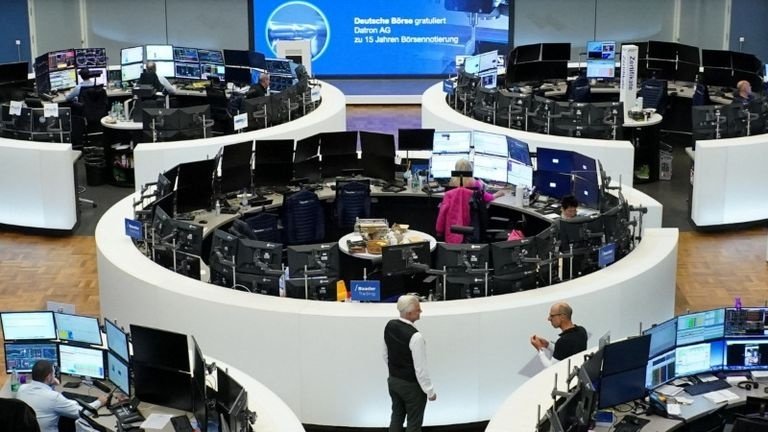
European markets faced a downturn at the end of the trading week, as escalating instability in the Middle East dampened investor appetite for risk. The STOXX 600 index slipped, positioning the region for a notable weekly loss as the “risk-off” sentiment took hold across major continental bourses.
Market Drivers and Sector Performance
The decline was largely dictated by external pressures and a shift in capital toward safer havens:
-
Geopolitical Anxiety: Uncertainty surrounding developments in the Middle East remained the primary catalyst for the sell-off. Investors moved away from equities, fearing that prolonged regional conflict could disrupt global energy supply chains and reignite inflationary pressures.
-
Safe-Haven Pivot: As stock prices wavered, there was a visible rotation into defensive assets. Gold and government bonds saw increased demand, while cyclical sectors—those most sensitive to economic fluctuations—bore the brunt of the selling pressure.
-
Corporate Headwinds: While some energy stocks found modest support from fluctuating oil prices, the broader market was weighed down by disappointing updates in the retail and travel sectors, which are particularly vulnerable to shifts in consumer confidence during times of geopolitical crisis.
Weekly Market Summary
| Index | Trend | Primary Factor |
| STOXX 600 | Negative | Geopolitical Risk |
| DAX (Germany) | Lower | Manufacturing & Export Concerns |
| CAC 40 (France) | Lower | Luxury & Consumer Volatility |
| FTSE 100 (UK) | Mixed | Energy Support vs. General Decline |
The Outlook
Market analysts suggest that European shares may remain volatile in the short term as traders await further clarity on diplomatic efforts in the Middle East. With the earnings season in full swing, the ability of major European corporations to maintain margins in a high-uncertainty environment will be critical in determining whether the markets can recover these weekly losses in the coming sessions.
European markets faced a downturn at the end of the trading week, as escalating instability in the Middle East dampened investor appetite for risk. The STOXX 600 index slipped, positioning the region for a notable weekly loss as the “risk-off” sentiment took hold across major continental bourses.
Market Drivers and Sector Performance
The decline was largely dictated by external pressures and a shift in capital toward safer havens:
-
Geopolitical Anxiety: Uncertainty surrounding developments in the Middle East remained the primary catalyst for the sell-off. Investors moved away from equities, fearing that prolonged regional conflict could disrupt global energy supply chains and reignite inflationary pressures.
-
Safe-Haven Pivot: As stock prices wavered, there was a visible rotation into defensive assets. Gold and government bonds saw increased demand, while cyclical sectors—those most sensitive to economic fluctuations—bore the brunt of the selling pressure.
-
Corporate Headwinds: While some energy stocks found modest support from fluctuating oil prices, the broader market was weighed down by disappointing updates in the retail and travel sectors, which are particularly vulnerable to shifts in consumer confidence during times of geopolitical crisis.
Weekly Market Summary
| Index | Trend | Primary Factor |
| STOXX 600 | Negative | Geopolitical Risk |
| DAX (Germany) | Lower | Manufacturing & Export Concerns |
| CAC 40 (France) | Lower | Luxury & Consumer Volatility |
| FTSE 100 (UK) | Mixed | Energy Support vs. General Decline |
The Outlook
Market analysts suggest that European shares may remain volatile in the short term as traders await further clarity on diplomatic efforts in the Middle East. With the earnings season in full swing, the ability of major European corporations to maintain margins in a high-uncertainty environment will be critical in determining whether the markets can recover these weekly losses in the coming sessions.
