

Google is pivoting its hardware and software strategy to place AI at the absolute center of the user experience. With the announcement of the Googlebook and a major overhaul to Android Auto, the company is moving away from the “cloud-first” simplicity of the original Chrome OS toward a more premium, intelligence-driven ecosystem.
The Googlebook: Beyond the Chromebook
The Googlebook represents a “premium evolution” of Google’s computing vision. No longer just affordable devices for education, these laptops—developed in partnership with Acer, Asus, Dell, HP, and Lenovo—must meet strict “premium” hardware guidelines.
Key Innovations:
-
The Magic Pointer: Moving past the stagnant design of the traditional cursor, this feature “comes alive” when jiggled. It offers contextual menus and can instantly send hovered content (like images or text) directly into Gemini for processing.
-
Deep Android Integration: Borrowing a page from Apple’s ecosystem, the Googlebook allows users to open phone apps directly on the laptop and seamlessly browse mobile files within the native file explorer.
-
Gemini Intelligence: Rather than being an add-on, Gemini is baked into the core software, influencing everything from UI interactions to system-level suggestions.
Android Auto: A Smarter Journey
Google is also bringing the “Gemini layer” to the road, aiming to make driving safer and more contextually aware for over 250 million supported vehicles.
1. Immersive Navigation
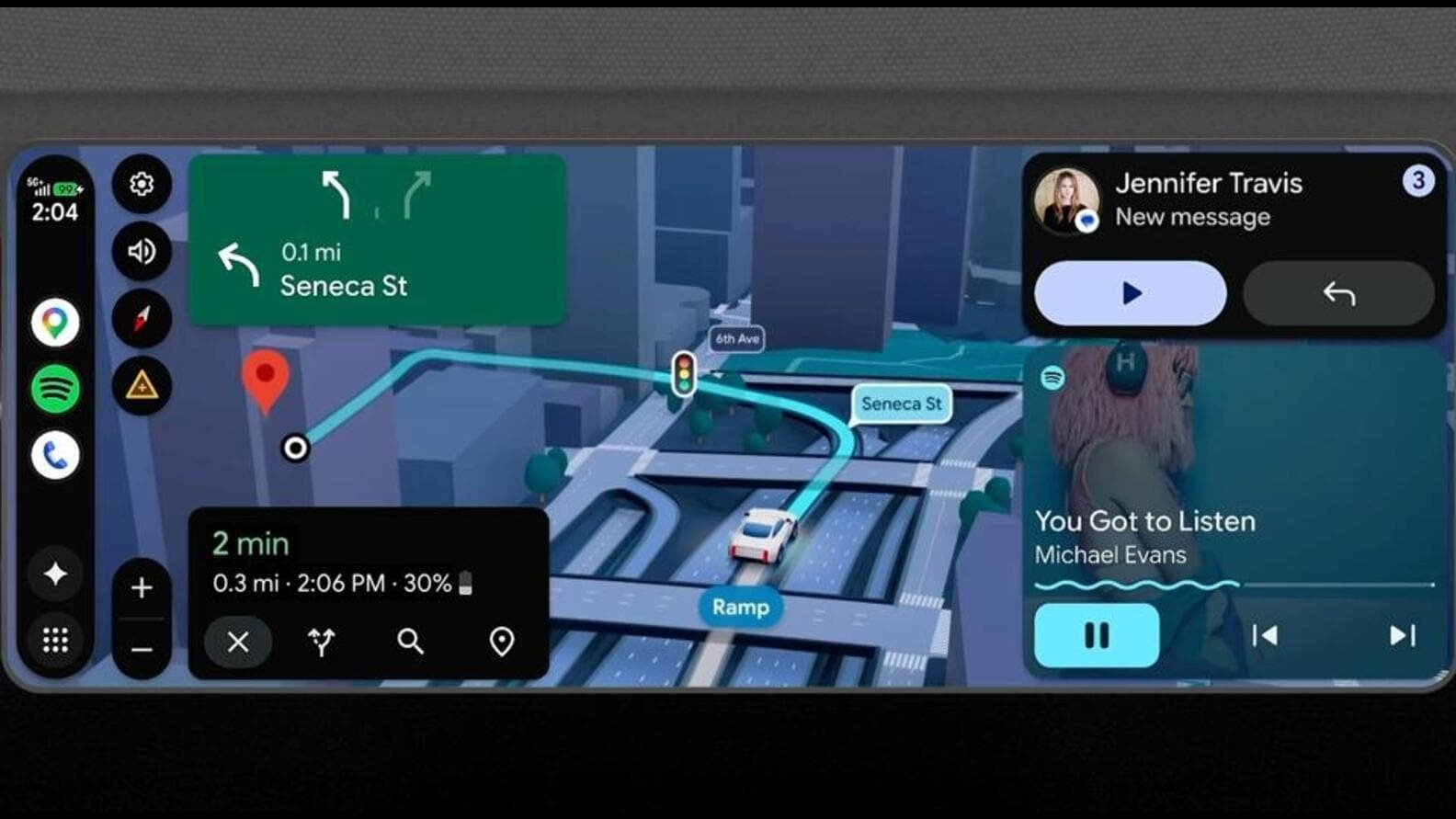
The biggest update to Google Maps in a decade introduces a vivid 3D view. Drivers will see detailed renderings of buildings, overpasses, and terrain, alongside critical road data like stop signs and specific lane guidance.
2. Material 3 Expressive Design
The interface is getting a visual refresh using the Material 3 design language. More importantly, the layout is now fully adaptive, automatically adjusting its aspect ratio to fit various screen types—from the wide displays in a Mercedes-Benz to the unique setups in Mahindra or Tata Motors.
3. Contextual Gemini Assistance
By integrating Gemini via the connected smartphone, Android Auto can now understand complex, multi-step prompts.
Example: Gemini can reference an ongoing chat conversation to automatically find a restaurant mentioned by a friend and send them your real-time ETA via Google Maps without the driver needing to switch apps.
The Big Picture
Whether it’s the “Magic Pointer” on a laptop or “Immersive Navigation” in a car, Google’s 2026 roadmap is clear: Gemini is the glue. By bridging the gap between hardware and high-level reasoning, Google is attempting to turn everyday tools into proactive digital partners.
