

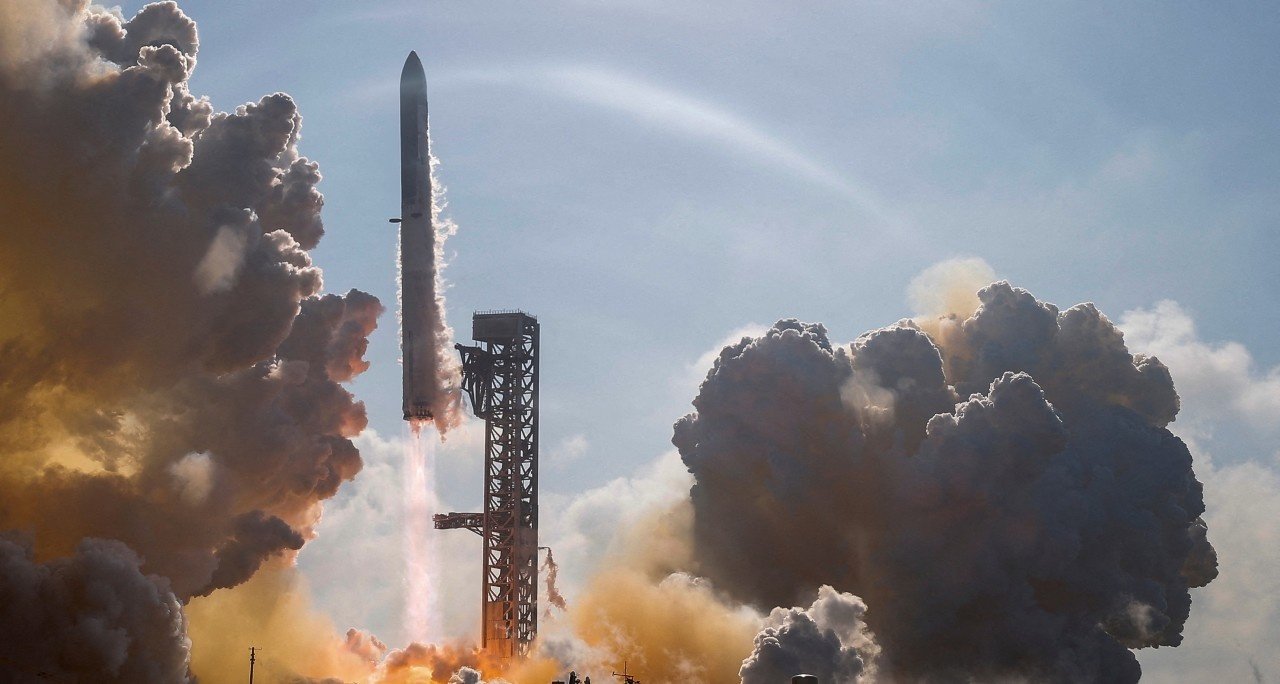
Elon Musk’s signature move has always been taking ideas straight out of science fiction and turning them into massive commercial ventures. With SpaceX officially filing its blockbuster S-1 paperwork to go public on the Nasdaq, Wall Street is facing the boldest financial wager in history.
By aiming to raise $75 billion at a valuation up to $1.75 trillion, the IPO is designed to generate unprecedented capital. The massive financial launchpad raises two inevitable questions: Will it actually fund a self-sustaining city on Mars, and is it guaranteed to produce the world’s first trillionaire?
The Capital Fueling a Sci-Fi Reality
The hundreds of pages in SpaceX’s regulatory filing detail a vision that looks far beyond traditional satellite launches. The capital raised is earmarked for long-term cosmic infrastructure that critics label a “black hole” for cash, but bulls see as the future of humanity.
1. The Road to Mars via the Moon
SpaceX intends to use Starship, its massive reusable spacecraft, to initiate uncrewed supply missions to the Red Planet by 2030. Because a one-way trip spans 140 million miles and takes six to nine months, the company is using the Moon—just a three-day journey away—as a vital stepping stone. The goal is to build lunar fuel depots, factories, and habitats to manufacture resources rather than dragging heavy cargo directly out of Earth’s intense gravity well.
2. Asteroid Mining (The 2040s Horizon)
To sustain a Martian civilization, SpaceX projects that it will eventually need to tap into local extraterrestrial resources. The company envisions landing on nearby asteroids—where near-zero gravity makes harvesting highly cost-effective—to extract platinum, nickel, gold, and massive deposits of water ice for life support and rocket fuel. However, industry analysts predict large-scale asteroid mining won’t become a reality until the 2040s or later.
3. AI Data Centers in the Deep Freeze of Orbit
Addressing the tech industry’s massive power and cooling crisis on Earth, SpaceX has floated a radical proposal: putting giant AI supercomputers directly into orbit on large satellite arrays. These space-bound data centers would utilize unfiltered, non-stop sunlight for solar energy, while leveraging the freezing, near-absolute-zero vacuum of space for free, passive cooling.
Birth of the Trillionaire & Ironclad Control
While the IPO aims to fund the cosmos, its immediate, definitive impact will be felt on Elon Musk’s personal balance sheet.
-
The Trillion-Dollar Threshold: Musk currently owns roughly 42% of SpaceX equity. At a $1.75 trillion valuation, his stake alone translates to $735 billion. When combined with his massive holdings in Tesla, xAI, and his other corporate ventures, the IPO officially crowns Musk as the world’s very first trillionaire.
-
The “Unfireable” CEO: The IPO introduces a dual-class share structure. Even though Musk holds less than half of the company’s equity, he retains over 80% of the voting power. This means public shareholders cannot pressure him to abandon high-risk projects for short-term profits. He is completely insulated from activist investors.
-
The New Billionaire Club: Musk isn’t the only one striking gold. The blockbuster listing will instantly push SpaceX President Gwynne Shotwell and CFO Bret Johnsen past the $1 billion mark. Early backer Antonio Gracias’s stake will skyrocket past $70 billion, while PayPal co-founder Luke Nosek will see his holdings hit roughly $5 billion.
The Reality Check: A High-Risk Bet for Investors
Despite entering the global Top 10 alongside giants like Nvidia, Microsoft, and Apple, SpaceX remains a highly volatile, deeply unprofitable enterprise.
The company posted a staggering $4.94 billion net loss in 2025, swallowed up by relentless research and development costs for Starship and Starlink. Furthermore, the S-1 filing bluntly warns investors about catastrophic space-related hazards:
“Our operations face a unique range of space-related risks, including radiation from solar and cosmic sources; micrometeoroids and orbital debris; and human injury or death… We have a history of net losses and may not achieve profitability in the future.”
Ultimately, investing in SPCX isn’t a play on traditional financial fundamentals. It is a pure, unadulterated speculative wager on the “Elon Musk Premium”—and whether his track record of defying gravity can turn a multi-planetary dream into a profitable reality.
