

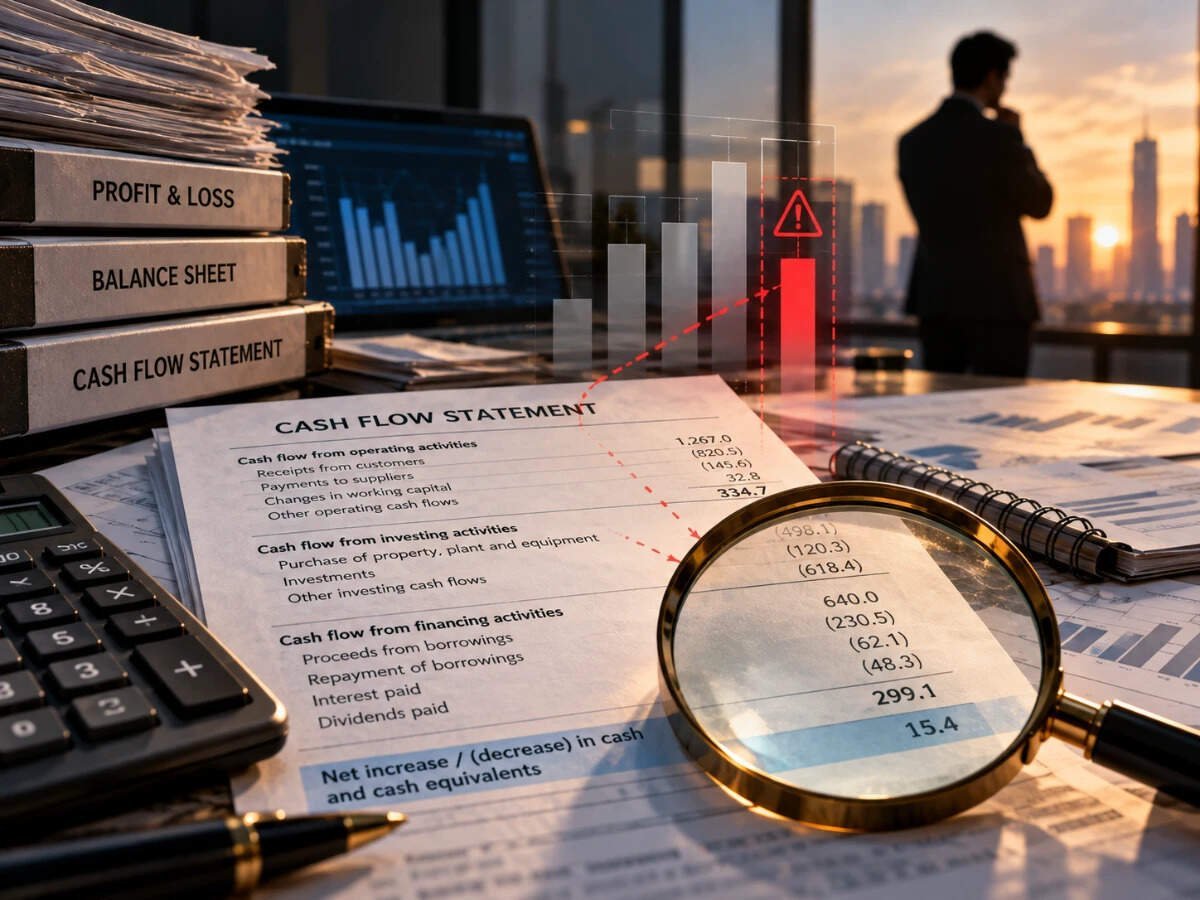
The cash-flow statement is traditionally viewed as the ultimate sanctuary of financial honesty—the place where you go to see whether a company is actually generating hard cash or merely reporting accounting profits.
Most investors, after getting burned by inflated earnings reports, learn to look past net income. They believe that cash is beyond manipulation because money is either in the bank or it isn’t. However, treating the cash-flow statement as infallible is one of the most expensive assumptions you can make in the stock market. A strong cash number can still mask a weak or vulnerable business.
How Cash Flow Can Be Dressed Up
While cash is ultimately a hard metric, the presentation and origin of that cash can be influenced. Here are some warning signs and mechanisms investors should watch for:
-
Related-Party Transactions: In troubling cases, money may move between connected companies or subsidiaries just before reporting periods end. This artificially inflates operating cash flow, making the business look cash-rich from internal rather than operational strength.
-
Aggressive Working Capital Management: A company can temporarily boost its operating cash flow by delaying payments to suppliers (stretching accounts payable) or aggressively collecting receivables right before the quarter closes, even if those practices strain operational relationships.
-
Financing vs. Operating Cash Flows: Sometimes, cash generated from financing activities (like borrowing or issuing debt) or asset sales can blur into the perception of core business strength if investors don’t read the fine print of the cash flow statement.
What Investors Should Watch For
To look beyond the headline cash flow number, always examine:
-
Quality of Earnings vs. Cash: Is the cash flow coming from core operations, or is it propped up by one-time asset sales or working capital maneuvers?
-
Free Cash Flow Sustainability: Compare operating cash flow against capital expenditures. Are cash flows consistent year-over-year, or do they spike erratically around reporting windows?
-
Related-Party Disclosures: Read the notes to the financial statements to check for significant transactions with group companies or subsidiaries.
In investing, no single financial statement tells the whole story. Cross-checking cash generation against operational realities and balance sheet health remains essential to avoiding hidden traps.
