

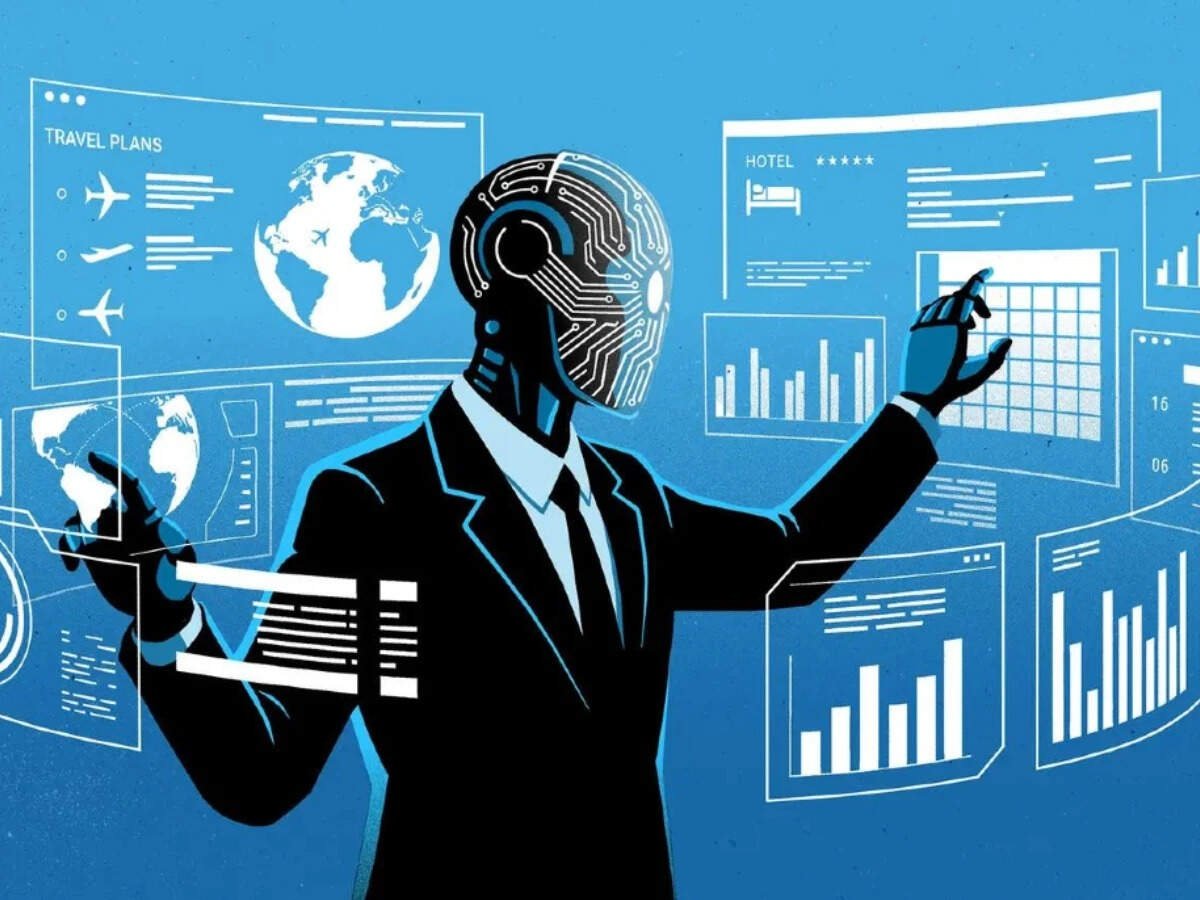
The artificial intelligence narrative is undergoing a fundamental shift—moving away from generative chatbots that simply answer questions toward autonomous AI agents capable of executing complex workplace tasks across multiple software applications.
However, despite rapid advancements in underlying model intelligence, enterprises face a major structural barrier: the execution and integration gap.
1. The Core Dilemma: Reasoning vs. Execution
The primary test for AI in the enterprise has evolved. While frontier Large Language Models (LLMs) excel at reasoning and context comprehension, their practical value remains constrained without access to live software environments.
Without direct system access and permissioning, even the most capable model functions merely as a glorified conversational bot.
2. The Fragmented Data Bottleneck
A key constraint in deploying AI agents effectively is the fragmented nature of corporate data:
-
CRM Platforms: House customer purchase histories and interactions.
-
Accounting & HR Systems: Maintain financial ledgers, payroll, and employee records.
-
Communications & Support: Live in siloed email clients, ticketing tools, and internal databases.
When an AI agent lacks a unified view of this data—such as a support agent operating without live usage logs or customer account access—the quality and reliability of its output degrade significantly.
3. Integration as the New Enterprise Infrastructure
Connecting AI agents dynamically across enterprise platforms represents a major engineering bottleneck:
-
High Technical Friction: Building a single custom software integration can take weeks, while scaling across dozens of SaaS platforms consumes entire quarters in developer bandwidth and API maintenance.
-
Dynamic Interaction: Traditional SaaS integrations relied on fixed, trigger-based rules. In contrast, AI agents require dynamic, real-time access to invoke tools, query context, and trigger actions based on changing states.
-
Emerging Integration Layer: Integration capabilities are shifting from backend IT tasks to core product requirements, spurring demand for a new middleware layer specifically built for AI tool-calling and orchestration.
Summary: The future of AI productivity will not be decided solely by parameter count or model reasoning speed, but by integration infrastructure. Until enterprises solve data access, security permissions, and API orchestration, AI agents will remain constrained in their ability to perform autonomous real-world work.
