

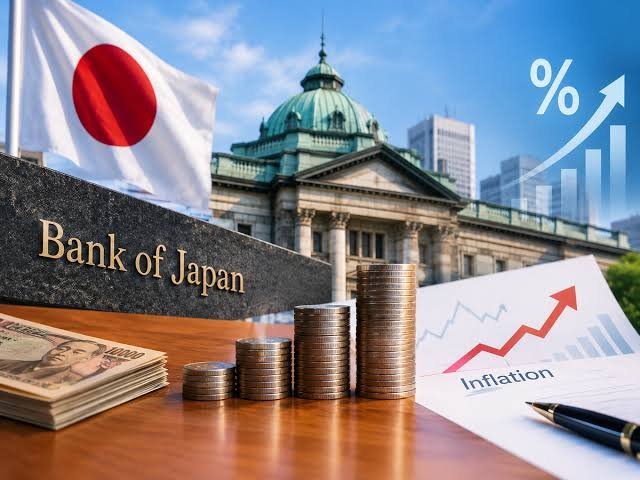
The Bank of Japan (BOJ) is increasingly shifting its policy focus toward containing upside price pressures, with recent meeting minutes revealing that several policymakers see a strong case for accelerating interest rate hikes. As underlying inflation closes in on the central bank’s 2% target, mounting global and domestic economic pressures are challenging long-held market assumptions about the pace of monetary tightening.
Shifting Focus Toward Upside Price Risks
While markets have traditionally priced in gradual rate adjustments—often anticipating pauses or extended intervals between hikes—board members are signaling a need for greater agility.
-
Accelerated Timeline: Minutes from recent policy deliberations indicate that underlying inflation is tracking close to the 2% threshold, reducing the margin for error.
-
Warning on Delays: Several officials emphasized that waiting too long to normalize policy could expose the domestic economy to severe downside shocks if inflation expectations outpace current projections.
-
Policy Normalization: Having previously pushed borrowing costs to multi-decade highs, the central bank is actively re-evaluating whether neutral rates need to be approached faster than previously communicated.
Key Drivers Behind the Hawkish Lean
-
Import Costs and Currency Pressures: Weakness in the yen, paired with volatile global commodity and energy markets driven by ongoing geopolitical tensions, continues to inflate import bills.
-
Sticky Underlying Inflation: Rather than focusing exclusively on lifting prices out of historical stagnation, the central bank’s core mandate is increasingly pivoting toward anchoring inflation stably around the target and preventing runaway cost-of-living increases.
Market Implications
The growing appetite among select BOJ members for a quicker tightening cycle signals potential volatility for fixed-income and currency markets. As global central banks navigate a complex landscape of sticky inflation and shifting energy dynamics, investors are closely watching Tokyo for definitive signals on whether upcoming policy meetings will deliver faster-than-expected rate adjustments.
