

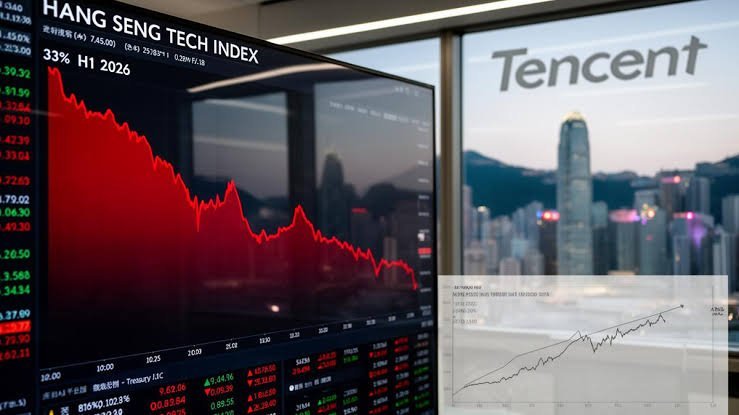
Chinese mainland equities experienced a mixed trading session as sharp corrections in high-flying artificial intelligence and semiconductor counters counterbalanced modest defensive inflows. Simultaneously, Hong Kong indices managed a slight positive drift, though underlying tech momentum remained constrained by heavy corporate sell-offs and shifting global macroeconomic crosscurrents.
Mainland Market Performance and Sectoral Divergence
At the midday break, the benchmark Shanghai Composite ticked up 0.2% to settle at 3,894.28 points, while the blue-chip CSI 300 index edged down 0.3%. Technology-heavy segments bore the brunt of the selling pressure:
-
Technology & Semiconductors: The ChiNext Composite retreated 0.5%, and Shanghai’s technology-centric STAR50 index dropped 0.9%. Specialized sub-indices suffered steeper corrections, with the CSI AI Index tumbling 1.2% and the CSI Semiconductor Index sliding 0.7%.
-
Defensive Cushion: Capital retreating from high-growth technology sectors flowed into defensive havens. China’s banking sector advanced 0.5%, reflecting a risk-averse positioning strategy among institutional portfolios.
Analysts at Guotai Haitong Securities noted that the broader macro environment remains complex, suggesting that domestic equities are likely to stay range-bound until concrete improvements emerge in corporate earnings fundamentals and market-wide liquidity.
Hong Kong Trading Dynamics and AI Stock Pressures
In Hong Kong, the Hang Seng Index rose 0.4% and the Hang Seng Tech Index added 0.2%, attempting to stabilize after consecutive sessions of losses. However, the broader resilience masked deep tech-sector vulnerabilities:
-
AI Sub-Index Plunge: The Hang Seng AI Index dropped sharply by 2.4%.
-
Corporate Movers: High-profile artificial intelligence firm Z.AI plunged as much as 10.5% to hit a five-month low following a heavily discounted share placement and convertible bond offering. Peer company MiniMax also faced aggressive profit-taking, declining 5.6% by the midday break.
The sharp corrections across major AI players underscore growing investor sensitivity toward stretched valuations, following intense global debate regarding the sustainable pace of commercial AI scaling, infrastructure buildouts, and tighter regulatory scrutiny.
Macro Headwinds and Global Central Bank Watch
Underpinning the regional caution is a fragile external environment defined by surging energy costs and impending monetary policy decisions. Geopolitical tensions and maritime security disruptions in key shipping lanes have driven crude oil prices higher, stoking renewed concerns over imported inflation.
With the U.S. Federal Reserve and the Bank of Japan scheduled to deliver critical interest-rate decisions, investors across Asian markets are adopting a defensive stance. The intersection of elevated energy prices, shifting rate expectations, and cooling sentiment toward high-growth tech disruptors is expected to enforce near-term market consolidation.
