

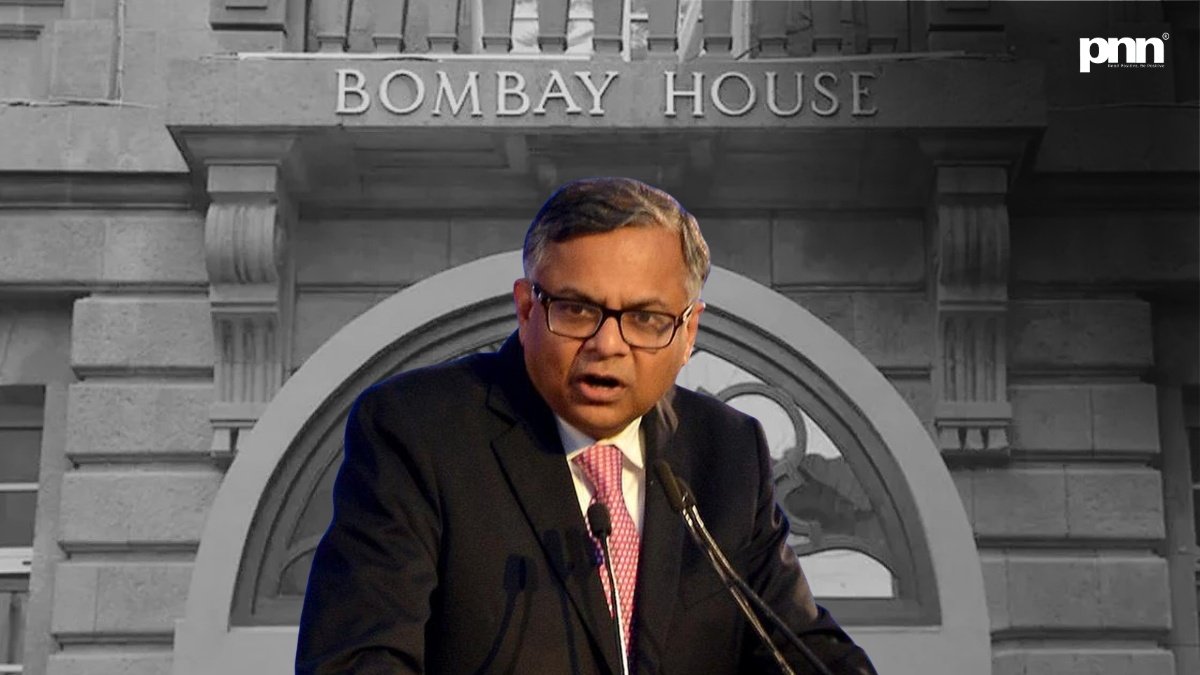
In a landmark development for India’s corporate landscape, Natarajan Chandrasekaran announced that he will not seek reappointment as Chairman of Tata Sons when his current term ends on February 20, 2027, bringing a close to his decade-long leadership at the helm of the $180-billion conglomerate.
His decision formally triggers a major executive succession process for the group, which spans businesses ranging from consumer goods and coffee (Tata Coffee, Starbucks India) to automotive manufacturing (Tata Motors, Jaguar Land Rover) and technology (TCS).
1. What Triggered the Exit?
Chandrasekaran, who has spent 40 years with the Tata Group, revealed that his decision was forced by a prolonged six-month board impasse regarding his term extension:
-
Trusts’ Recommendation: The Sir Dorabji Tata Trust and Sir Ratan Tata Trust (which hold a combined ~66% stake in Tata Sons) had unanimously resolved to grant him a five-year extension.
-
Board Impasse: When the proposal was placed before the Tata Sons Board on February 24, 2026, it failed to pass because one board member withheld support. Under Tata Sons’ corporate bylaws, director appointments and extensions require unanimous backing.
-
Six Months of Uncertainty: With no resolution reached over six months, Chandrasekaran chose to step aside rather than prolong leadership ambiguity during crucial execution phases of group projects. Reports also point to underlying governance differences with Tata Trusts Chairman Noel Tata regarding strategic direction and the potential public listing of Tata Sons.
“Tata Sons is a very large institution and there are many strategic projects under critical stages of execution… Clarity on leadership is important for employees, investors, partners and other stakeholders.”
— N. Chandrasekaran, in his statement to the Board.
2. Key Pillars of Chandrasekaran’s 10-Year Legacy
Since becoming the first non-family, professional manager to head Tata Sons in 2017 following the exit of Cyrus Mistry, “Chandra” led a massive structural transformation of the group:
-
Aviation Renaissance: Spearheaded the historic re-acquisition of Air India in 2022 and managed its integration with Vistara and AirAsia India.
-
New-Age & Tech Bets: Expanded the group aggressively into semiconductors, EV battery gigafactories, electronics manufacturing, and digital ecosystem apps (Tata Neu).
-
Financial Consolidation: Simplified group cross-holdings, deleveraged major balance sheets (notably Tata Steel), and dramatically boosted group profitability, earning him a remuneration of ₹158.66 crore in FY26.
3. Market Impact & What Comes Next
Following the announcement, Tata Group stocks experienced a sharp knee-jerk reaction on Indian benchmarks, with group market capitalization shedding over ₹40,000 crore intraday:
| Company | Intraday Impact | Focus Area |
| Tata Consultancy Services (TCS) | Down ~4% | Leadership transition at holding company level |
| Tata Motors | Down 1-3% | Execution of EV transition & JLR strategy |
| Tata Steel | Down 1-3% | Restructuring & UK transition project |
| Tata Technologies & Elxsi | Down 1-3% | Tech & engineering services sentiment |
What Lies Ahead: The Succession Process
Chandrasekaran will remain in office as Chairman until February 20, 2027, providing the board a multi-month window to execute a smooth transition:
-
Selection Committee: Tata Sons will constitute a high-level selection panel (including Tata Trusts representatives and independent experts) as mandated by its Articles of Association.
-
Key Candidates: The search will consider both internal CEOs leading top group companies (such as TCS, Tata Motors, or Tata Steel) and external global executives.
