

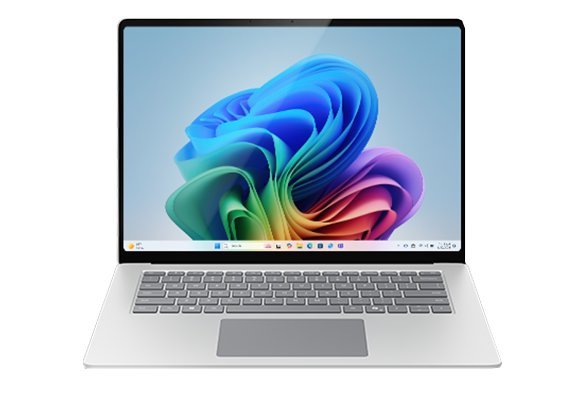
After spending years testing laptops, I have noticed that the MacBook experience is not just about Apple’s chip or the familiar design. It is the combination of battery life, a sharp display, quiet performance, portability and a laptop that feels effortless to use every day. But switching to macOS is not for everyone, especially if you rely on Windows software, gaming or a more flexible ecosystem.
Thankfully, the Windows laptop market has caught up in several of these areas. From lightweight designs and OLED displays to efficient processors and long battery life, there are now several MacBook alternatives that can make sense for different types of users.
Top Windows Alternatives to MacBook
-
HP Omnibook 5 OLED (Best Overall): Combining a large 16-inch 2K OLED display with Qualcomm’s Snapdragon X platform and a 45 TOPS NPU, this model is built for everyday productivity, entertainment, and multitasking. It features 16GB LPDDR5x RAM, a 1TB SSD, and multi-day battery focus while keeping the chassis at a portable 1.59kg. (Priced around ₹84,990)
-
ASUS Vivobook S14: A compact AI laptop driven by the AMD Ryzen AI 5 330 processor and a 50 TOPS NPU. It features a 14-inch OLED display, upgradeable 16GB RAM, and a 512GB SSD inside a sleek 1.4kg metallic frame. (Priced around ₹93,990)
-
ASUS Zenbook 14: Engineered for mobile professionals, this ultraportable weighs just 1.28kg and packs an Intel Core Ultra 5 (Series 2) processor, 16GB RAM, a 1TB SSD, and a gorgeous 14-inch 3K 120Hz OLED touchscreen. (Priced around ₹1.28L)
-
Dell 15 AI Powered Laptop (Value for Money): Bringing Intel’s Core Ultra 5 225H processor to a larger 15.6-inch format, it pairs a Full HD anti-glare screen with 8GB/16GB DDR5 RAM, a 512GB SSD, a dedicated Copilot key, and Intel Arc graphics. (Priced around ₹85,990)
-
Dell 15 (Previous Generation): A straightforward productivity machine built around Intel’s 13th Gen Core i7 1355U processor, 16GB RAM, and 512GB SSD, offering reliable performance for documents, spreadsheets, and routine multitasking. (Priced around ₹82,990)
Quick Feature Comparison
| Product | Display | Processor | RAM & Storage | Weight |
| HP Omnibook 5 OLED | 16-inch 2K OLED Touch | Snapdragon X | 16GB / 1TB SSD | 1.59 kg |
| ASUS Vivobook S14 | 14-inch WUXGA OLED | AMD Ryzen AI 5 330 | 16GB / 512GB SSD | 1.4 kg |
| ASUS Zenbook 14 | 14-inch 3K 120Hz OLED Touch | Intel Core Ultra 5 (Series 2) | 16GB / 1TB SSD | 1.28 kg |
| Dell 15 AI Powered | 15.6-inch FHD Anti-Glare | Intel Core Ultra 5 225H | 8GB/16GB / 512GB SSD | ~1.6 kg |
Choosing the right Windows alternative depends entirely on your daily routine. If you want maximum screen space and multi-day endurance, the HP Omnibook 5 OLED leads the pack. If ultimate portability and a buttery-smooth 120Hz display are your priorities, the ASUS Zenbook 14 serves as a stellar Mac twin.
