

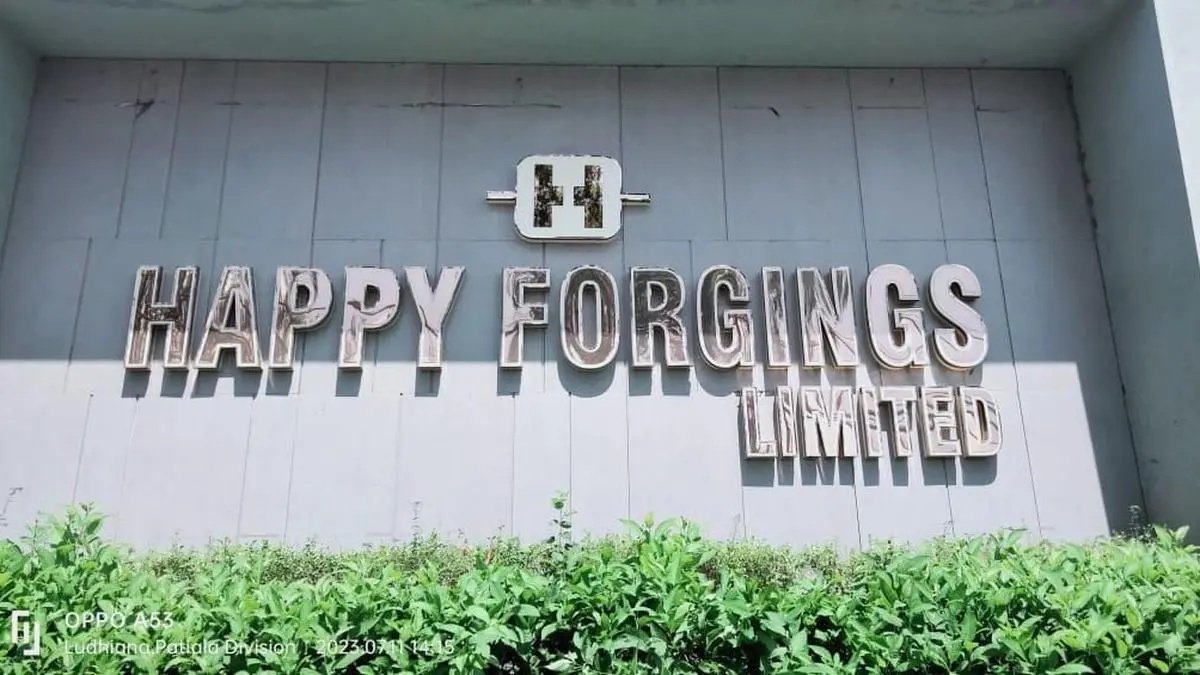
Part 57 of the ET Prime series highlights Happy Forgings Ltd., a company that has managed to remain largely under the radar despite its critical role in the supply chains of giants like Tata Motors, Mahindra & Mahindra (M&M), JCB, and Liebherr.
For over 40 years, this Ludhiana-based firm has specialized in manufacturing high-precision crankshafts and other safety-critical heavy components. While the automotive world is obsessed with the transition to Electric Vehicles (EVs), HFL presents a compelling “old economy” growth story with a modern twist.
Financial and Strategic Highlights
-
Industry-Leading Margins: The company boasts a near 30% EBITDA margin (specifically 29.1% in Q4FY25), which is significantly higher than most of its forging peers. This is largely due to its high “machining content”—it doesn’t just forge raw parts but finishes them to high specifications, capturing more value.
-
The EV “Moat”: While crankshafts are obsolete in passenger EVs, HFL’s management argues their risk is minimal. Their core business serves Heavy Commercial Vehicles (HCVs), tractors, and off-highway machinery—sectors where electrification is expected to be much slower due to power-to-weight requirements.
-
Expanding Infrastructure: HFL is home to one of India’s largest forging presses (14,000 tonnes). They are currently executing a fresh capital expenditure (capex) plan to further diversify into non-automotive sectors like wind energy, railways, and defense.
-
Customer Trust: They are a “single-source” supplier for many critical components for their marquee clients, reflecting a high degree of technical stickiness.
Investment Perspective
Despite the bearish sentiment that gripped Indian markets in early 2026 due to the West Asia conflict, HFL and similar auto-ancillary firms have shown resilience.
-
Diversification: Beyond India, the company is aggressively targeting the North American and European markets to hedge against domestic cyclicality.
-
Valuation: Analysts have historically viewed HFL as a premium play in the forging space. With a clean balance sheet (low Debt-to-Equity ratio of 0.1x) and strong internal accruals, it is positioned to fund its growth without heavy borrowing.
In a market currently obsessed with “new-age” tech, HFL represents the “picks and shovels” of the industrial world—profitable, expanding, and essential, even if “nobody talks about it enough.”
