

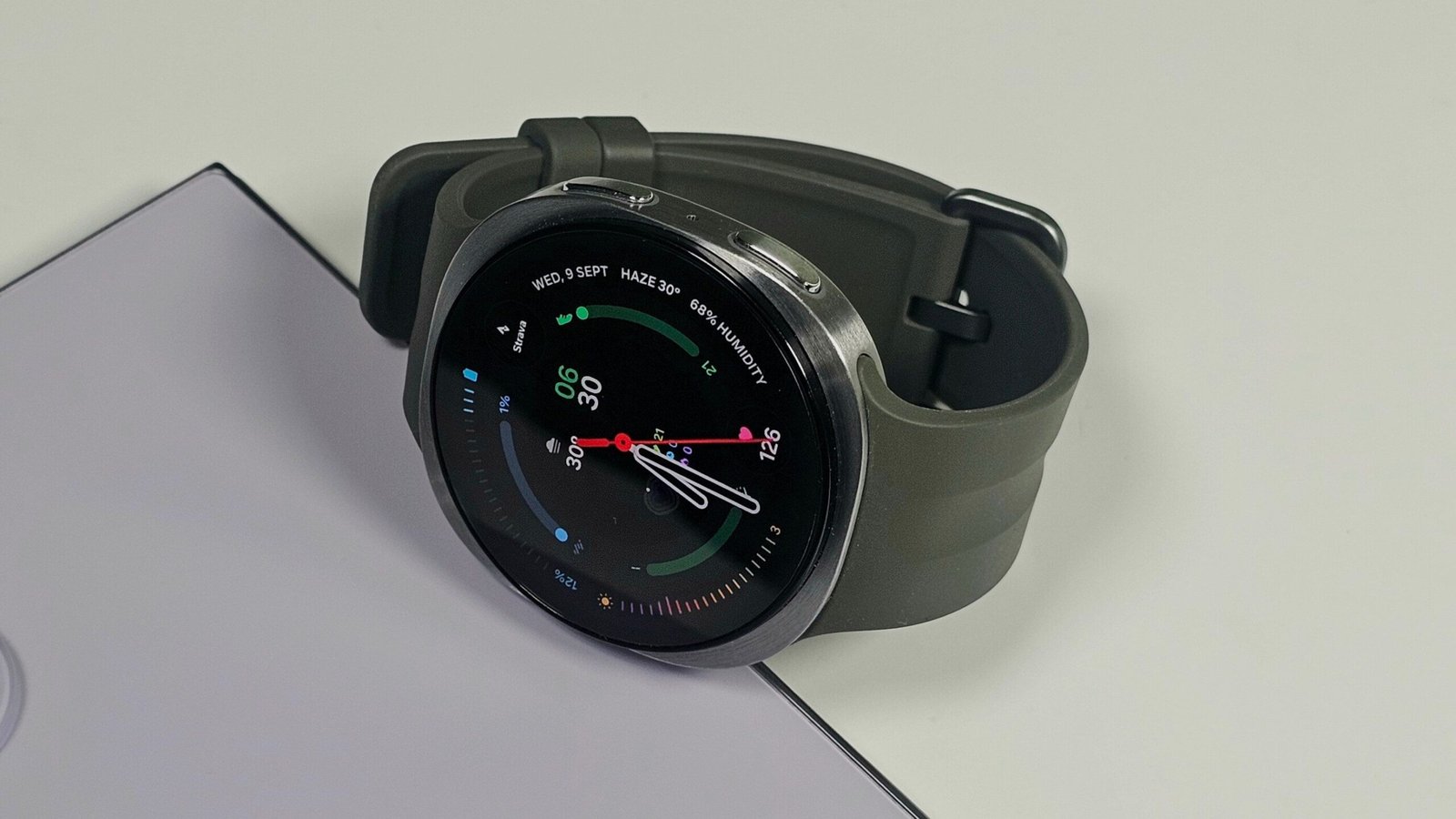
Smartwatches have evolved far beyond simple notification pushers and workout loggers. Today, they serve as miniature health dashboards on our wrists. However, having an endless list of health features doesn’t automatically translate to useful data. Heart rate and blood oxygen (SpO2) remain the two metrics people monitor most regularly—whether during an intense workout or simply going about their day.
To help you figure out which wearable actually delivers reliable daily health tracking, four current smartwatches from Apple, Samsung, Google, and Amazfit went head-to-head.
Comparison of Recommended Health Smartwatches
| Model | Display | Key Health Sensors | Battery Life | Ecosystem | Price (Approx.) |
| Apple Watch Series 12 | 42/46mm LTPO3 OLED (2,000 nits) | Optical/Electrical Heart, SpO2, Temp | Up to 24 hours | iOS only | ₹62,900 |
| Samsung Galaxy Watch9 | 1.34-inch Super AMOLED | Optical Heart, Electrical Heart, BIA, Temp | Up to 40 hours | Android (Samsung-optimized) | ₹40,906 |
| Google Pixel Watch 4 | Actua 360 domed (3,000 nits) | Multi-path Heart, SpO2, ECG, cEDA, Temp | Up to 40 hours | Android only | ₹39,800 |
| Amazfit Active 3 Premium | 1.32-inch AMOLED Sapphire | BioTracker PPG (24/7 Heart & SpO2) | Up to 12 days | Android & iOS | ₹15,999 |
1. Best Overall: Apple Watch Series 12 (GPS 46mm)
If health tracking is your primary reason for buying a smartwatch, the Apple Watch Series 12 stands out as the top pick. It excels at quickly surfacing heart rate trends and high-frequency HRV readings without cluttering the user experience.
-
The Good: Seamless integration of heart rate monitoring, ECG, blood oxygen tracking, and Vitals insights.
-
The Catch: Battery life remains short, capping out at around 24 hours, meaning daily charges are non-negotiable.
2. Best for Daily Insights: Samsung Galaxy Watch9
For users who want comprehensive health tracking without wearing a dedicated fitness band, the Galaxy Watch9 strikes a great balance. It tracks everything from heart rate and SpO2 to sleep quality and body composition. Samsung organizes all this metrics cleanly within its health app to make trend tracking easy.
-
The Good: Comfortable overnight wear, robust body composition analysis (BIA), and up to 40 hours of battery life.
-
The Catch: Some advanced features are restricted if you aren’t pairing it with a Samsung phone.
3. Best Android Ecosystem Pick: Google Pixel Watch 4
Google’s Pixel Watch 4 leverages deep Fitbit integration to offer reliable health analytics and actionable wellness tips. Featuring a bright, domed display and continuous monitoring capabilities, it bridges daily lifestyle utility with robust physiological data tracking.
-
The Good: Excellent Fitbit ecosystem integration, continuous heart rate and nightly SpO2 logging.
-
The Catch: Limited strictly to Android smartphones.
4. Best Value & Battery King: Amazfit Active 3 Premium
If you want deep fitness and health monitoring without spending flagship money, the Amazfit Active 3 Premium is a standout choice. It delivers 24-hour heart rate and blood oxygen tracking alongside robust multi-satellite GPS.
-
The Good: Phenomenal battery life lasting up to 12 days, making continuous sleep and health tracking effortless.
-
The Catch: Its health readings are designed for general wellness tracking rather than clinical medical measurements.
Key Factors to Consider Before Buying
-
Sensor Accuracy: Prioritize devices with reliable optical heart rate sensors and consistent background SpO2 tracking over raw spec-sheet counts.
-
Fit and Comfort: A snug, secure fit is essential for accurate optical tracking, especially during strenuous workouts and overnight sleep monitoring.
-
Health Insights: Look at how a brand presents your data. Meaningful trends, automated alerts, and recovery scores matter more than isolated numerical readouts.
-
Battery Life: Frequent charging intervals can disrupt continuous health tracking routines, particularly overnight sleep and SpO2 logging.
-
Phone Compatibility: Always verify cross-platform compatibility, as many advanced diagnostic features remain locked to specific ecosystems (like iOS or specific Android brands).
