

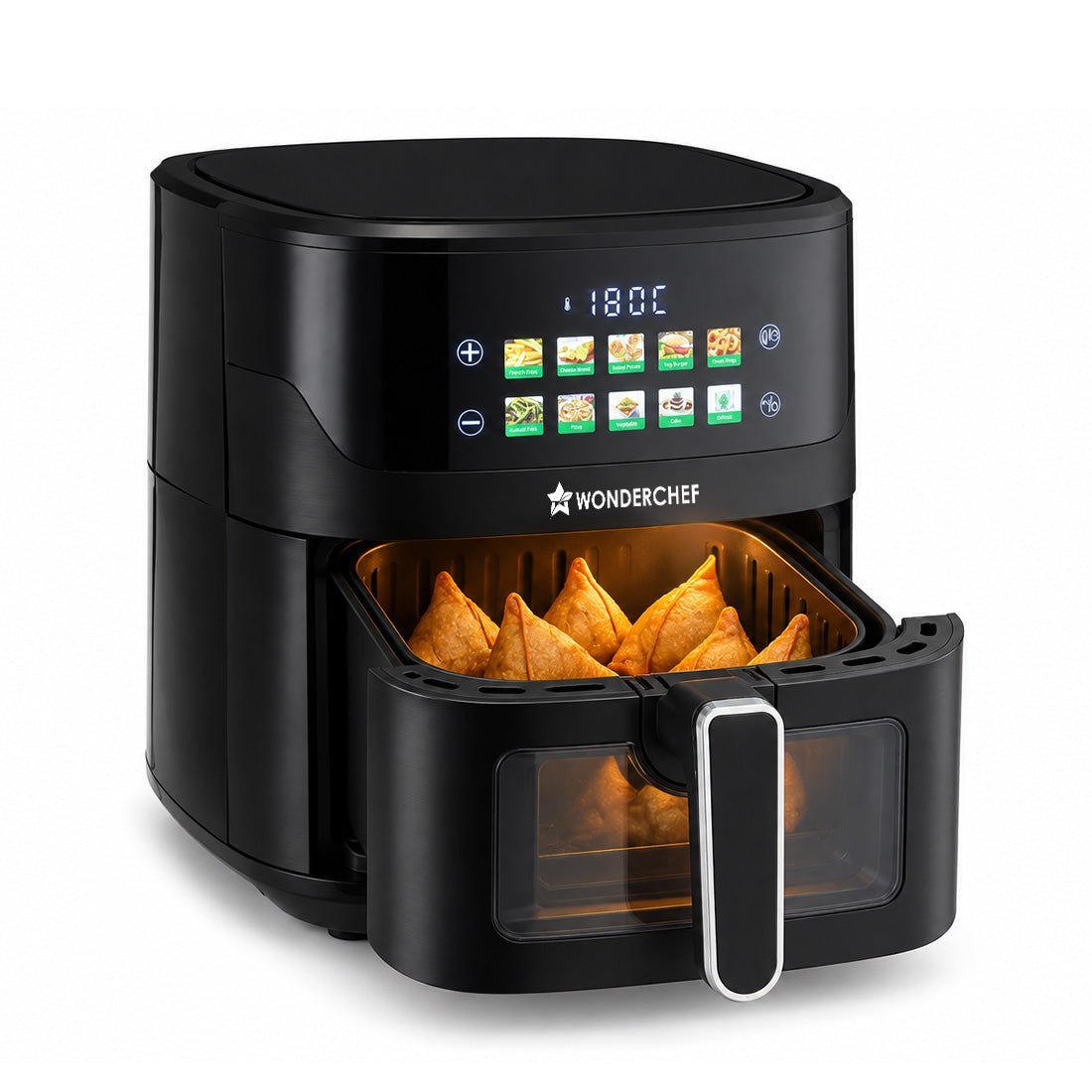
When shopping for an air fryer, it is easy to assume that all models perform the same core function: circulating hot air to cook food with little to no oil. Whether you are roasting vegetables, crisping French fries, or baking a batch of muffins, the fundamental mechanism remains identical across price points.
However, there is a vast functional, engineering, and experiential gap between an entry-level ₹3,000 air fryer, a mid-tier ₹7,000 model, and a high-end ₹15,000 appliance. Understanding what you gain—and what you sacrifice—at each price bracket can help you determine which tier matches your culinary habits and budget.
Feature Breakdown at a Glance
| Feature | ₹3,000 Air Fryers | ₹7,000 Air Fryers | ₹15,000 Air Fryers |
| Capacity | Typically 2L – 4.5L | ~4L to 7L (some oven styles offer more) | 4.7L to 7.2L; multi-zone / up to 20L ovens |
| Controls | Manual dials or basic digital touchpads | Digital touch panels & LED displays | Advanced digital displays, smart automation |
| Cooking Modes | Air fry, roast, reheat | Air fry, roast, bake, grill, defrost | Multi-zone cooking, dehydrate, rotisserie, smart presets |
| Basket Design | Standard removable non-stick basket | Larger single baskets, viewing windows | Dual-independent baskets, toxin-free ceramic/glass |
| Smart Features | None / Basic timer | Limited presets | App connectivity, remote monitoring, shake reminders |
1. The ₹3,000 Air Fryer: Basic, Functional, and Compact
-
Target Audience: Students, singles, couples, or first-time buyers testing the waters of oil-free cooking.
Priced around ₹3,000, entry-level air fryers are built to handle everyday snacking without requiring a heavy financial commitment. These models focus strictly on essential cooking tasks.
-
What You Get:
-
Compact capacities ranging from 2L to 4.5L, suitable for small portions of fries, nuggets, or roasted vegetables.
-
Basic configuration featuring either manual analog dials or simple digital touch panels to adjust timers and temperature (typically up to 200°C).
-
Standard removable cooking baskets coated with basic non-stick materials.
-
-
The Limitations: You are restricted to single-batch cooking. Preparing a meal for a family of four will require running the appliance multiple times. Controls lack precision, and viewing windows are rare, meaning you must pull out the basket to check food progress.
2. The ₹7,000 Air Fryer: The Sweet Spot for Small Families
-
Target Audience: Small-to-medium families and regular home cooks who use their air fryer several times a week.
Stepping up to the ₹7,000 price point shifts the focus from occasional snacking to everyday meal preparation. This tier introduces structural and technical refinements that make cooking faster and more versatile.
-
What You Get:
-
Generous capacities between 4L and 7L (or compact oven-style form factors), allowing you to cook whole chickens or larger batches of family meals in one go.
-
Modern touch panels, LED displays, and multi-preset cooking menus that take the guesswork out of timing.
-
Expanded cooking functions including baking, grilling, roasting, and reheating, alongside features like built-in viewing windows and internal lighting on select models.
-
-
Why It’s Worth Considering: This tier eliminates the bottleneck of small basket sizes. You can roast a complete meal or cook family-sized portions of chicken without batching, while digital temperature controls offer much better consistency.
3. The ₹15,000 Air Fryer: Premium Performance, Dual Zones, and Smart Tech
-
Target Audience: Large families, passionate home chefs, and tech enthusiasts who want maximum culinary flexibility and convenience.
At the top end of the consumer spectrum, ₹15,000 air fryers introduce advanced engineering, premium materials, and multi-zone capabilities designed to streamline complex meal preparation.
-
What You Get:
-
Dual-Basket Configurations or Large Ovens: Cook two different foods using independent temperatures and timers simultaneously (e.g., roasting chicken in zone one while baking vegetables in zone two), or utilize large 12L–20L oven capacities with rotisserie functions.
-
Advanced Materials: Higher-grade, toxin-free ceramic or pure glass bowls (such as PFAS/PTFE-free coatings) that prioritize health and scratch resistance.
-
Smart Connectivity & Automation: App integration, remote monitoring, recipe guides, shake reminders, and precise digital thermal regulation.
-
Dehydrate & Specialty Modes: Beyond basic frying, these units often double as food dehydrators, proofing boxes, or mini convection ovens.
-
-
Who Should Buy It: If you cook elaborate meals daily, feed a large household, or demand multi-tasking appliance features, the convenience and time-saved justify the investment. However, if you only plan to reheat frozen snacks or fry occasional portions of French fries, these advanced features will likely go underutilized.
Final Verdict: Which One Should You Choose?
-
Buy a ₹3,000 model if you live alone, have limited kitchen space, and only want a quick, affordable way to make crispy snacks.
-
Buy a ₹7,000 model if you have a small family and want a reliable everyday appliance that can handle baking, roasting, and larger single-batch meals.
-
Buy a ₹15,000 model if you need dual-zone cooking freedom, premium health-conscious materials, smart app controls, and the capacity to feed a crowd effortlessly.
