

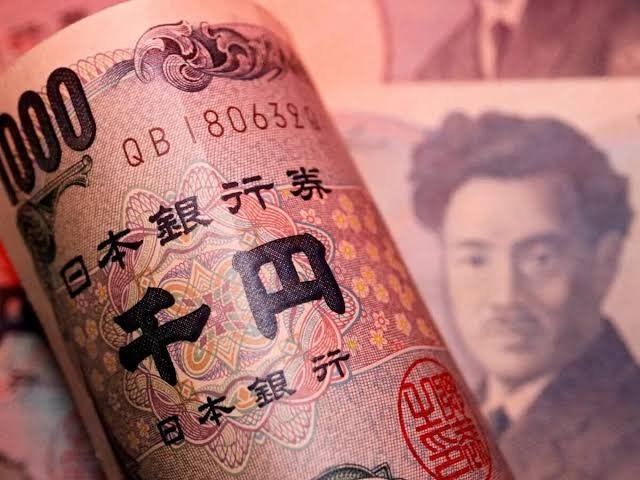
Japan’s Ministry of Finance (MoF) and the Bank of Japan (BOJ) have a long history of intervening in foreign exchange markets. While earlier decades often saw Japanese authorities selling yen to prevent excessive currency strength from hurting export-led growth, recent operations have shifted heavily toward aggressive yen-buying and dollar-selling to defend against record currency weakness.
Timeline of Major Foreign Exchange Interventions
July 2026: Coordinated Foreign Exchange Action
-
Context: The yen touched near four-decade lows around 163.99 per dollar due to elevated energy import costs and persistent interest rate differentials.
-
Action: Suspected joint intervention during New York trading hours—coordinated alongside South Korean authorities—drove the yen sharply stronger by over 3% to 157.8 per dollar.
April–May 2026: Record $72 Billion Support
-
Context: The yen weakened beyond 160.72 per dollar, triggering warnings of “decisive” intervention from government officials.
-
Action: Ministry of Finance data revealed a record monthly spend of 11.7 trillion yen (~$72.5 billion) in foreign exchange markets to stabilize the currency back toward 155.5 per dollar.
July 2024: Defending Multi-Decade Lows
-
Context: The yen dropped to 161.76 per dollar, its weakest level in nearly 38 years.
-
Action: Japanese monetary authorities deployed 5.53 trillion yen (~$36.8 billion) across July 11–12, pushing the rate back toward 157.30 per dollar.
April–May 2024: $62 Billion Intervention Rounds
-
Context: Rapid yen depreciation hit 160.25 per dollar.
-
Action: Japan launched its largest single-day yen-buying intervention on April 29, followed by another round on May 1, spending a cumulative 9.79 trillion yen (~$62.2 billion).
September–October 2022: First Yen-Buying Operations in Decades
-
Context: Widening interest rate gaps between the US Federal Reserve and the BOJ led to rapid one-sided depreciation beyond 143 per dollar.
-
Action: Japan stepped into FX markets in September 2022 to buy yen for the first time since 1998. Between October 21–24, authorities spent 6.35 trillion yen (~$42.8 billion).
Historical Context: Yen-Selling Interventions (2000s–2010s)
Before 2022, Japanese currency interventions were overwhelmingly aimed at weakening an overvalued yen to safeguard domestic exporters:
-
March & Late 2011: Following the March 2011 earthquake and tsunami, the yen surged to record highs. Group of Seven (G7) nations conducted a joint intervention on March 18 to weaken the yen. Japan followed up with independent yen-selling in August and October.
-
September 2010: Japan intervened for the first time in six years, selling yen as the dollar hit a 15-year low near 82.87 yen.
-
2003–March 2004: Japan undertook a massive 15-month yen-selling campaign, dumping a record 35 trillion yen (over $300 billion) into FX markets to curb persistent currency appreciation.
Key Takeaway
| Era | Primary Goal | Key Triggers |
| 2003–2011 | Weaken Yen (Yen-selling / Dollar-buying) | Exporter competitiveness, earthquake/tsunami shock, safe-haven surges |
| 2022–2026 | Strengthen Yen (Yen-buying / Dollar-selling) | Multi-decade currency lows, interest rate differentials, energy import inflation |
