

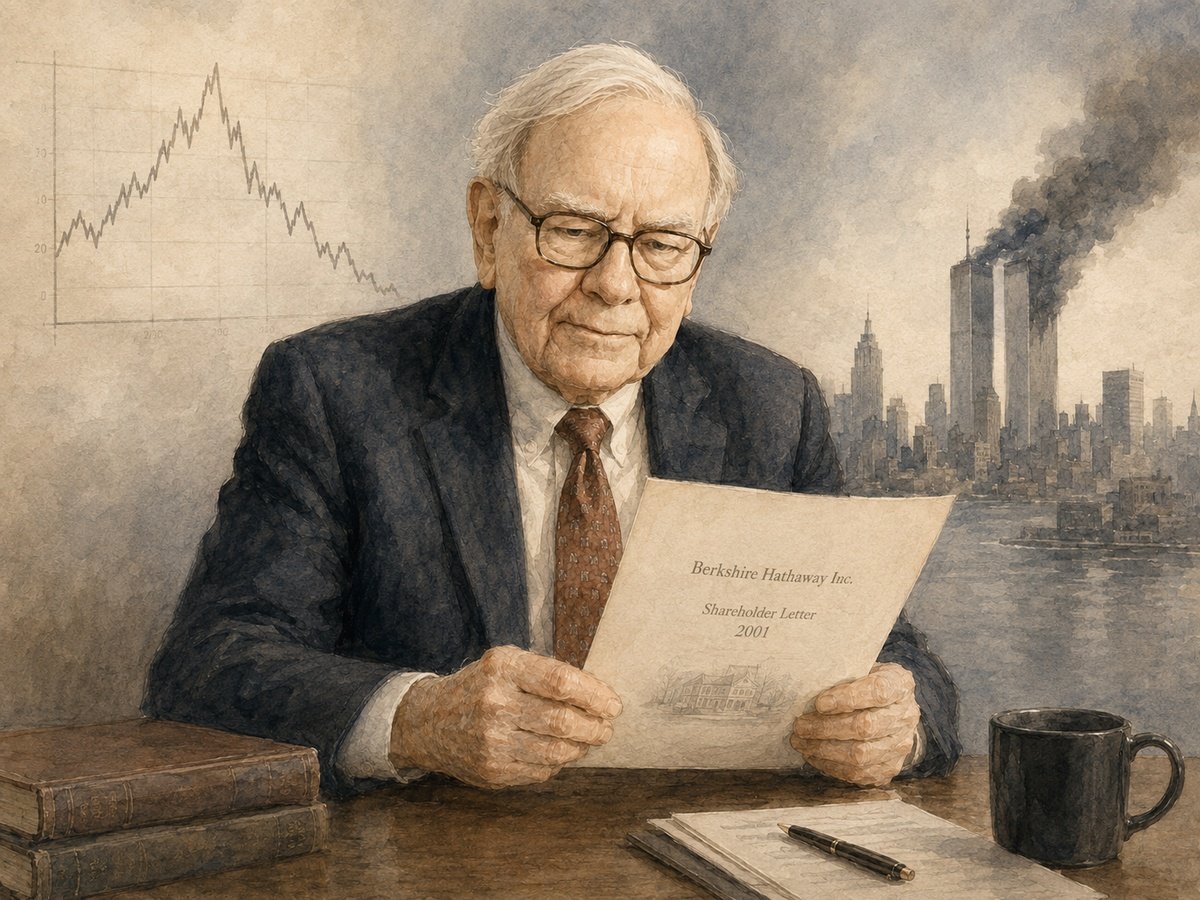
When Warren Buffett penned this iconic line in his 2001 letter to Berkshire Hathaway shareholders, he was looking back at a year that had stripped away all market illusions. The year 2001 saw a brutal combination of a burst Dot-com bubble, the aftermath of a catastrophic terrorist attack, and a toxic wave of corporate scandals like Enron.
Today, as capital floods into the artificial intelligence sector and AI-related stocks trade at astronomical valuations, Buffett’s quarter-century-old warning is ringing out again. An executive can disguise systemic structural weakness when cash is cheap and market enthusiasm is high. But when capital tightens or growth targets miss, reality sets in.
The Illusion of a Rising Tide
During a speculative market boom, a rising tide lifts all boats—even the leaky ones. In a roaring bull market, sophisticated investors and reckless speculators look identical because everyone is making money on paper.
In 2001, Buffett pointed out that when the economic environment is pristine, companies can take on excessive risks, burn through cash, and mask poor business models behind industry buzzwords. In 2001, that word was “Internet.” In 2026, that word is “AI.”
The fundamental trap isn’t that people are ignorant of the risks; it’s that they believe they can anticipate the turn and escape before the tide recedes.
Knowing Risk vs. Managing Risk
The core of Buffett’s masterclass wasn’t just identifying that a bubble existed, but highlighting the gap between intellectually recognizing a risk and actually altering your behavior because of it.
Many fund managers in 2000 openly admitted that internet startups were vastly overvalued, yet they continued to buy them because they feared underperforming their peers in the short term. Buffett accepted years of criticism for underperforming the market during the late ’90s because he refused to invest in businesses he didn’t understand or whose cash flows he couldn’t project.
When the tide inevitably went out, Berkshire Hathaway sat on massive cushions of cash, ready to buy up distressed, high-quality assets at a deep discount, while the “naked swimmers” went bankrupt.
How to Spot the “Naked Swimmers” in the AI Era
If you are looking at the current AI landscape through Buffett’s value-investing lens, you can separate structural powerhouses from speculative bubbles by asking three questions:
1. Where is the Economic Moat?
A company that simply builds a wrapper around someone else’s proprietary foundation model has no structural barrier to entry. If a competitor can copy your entire business model over a weekend, you don’t possess an economic moat.
2. Is the Capital Expenditure Translating to Revenue?
Building AI infrastructure demands billions of dollars in data centers, energy infrastructure, and silicon chips. If a company is spending massive amounts of capital expenditure (CapEx) but cannot show an accelerating stream of free cash flow from paying enterprise clients, it is highly vulnerable when the market cools.
3. What is the Margin of Safety?
The margin of safety is the difference between a company’s intrinsic value and its market price. If you buy an AI stock trading at an astronomical Price-to-Sales multiple based purely on perfection 10 years down the line, your margin of safety is non-existent. Even a great company can be a terrible investment if you pay the wrong price.
