

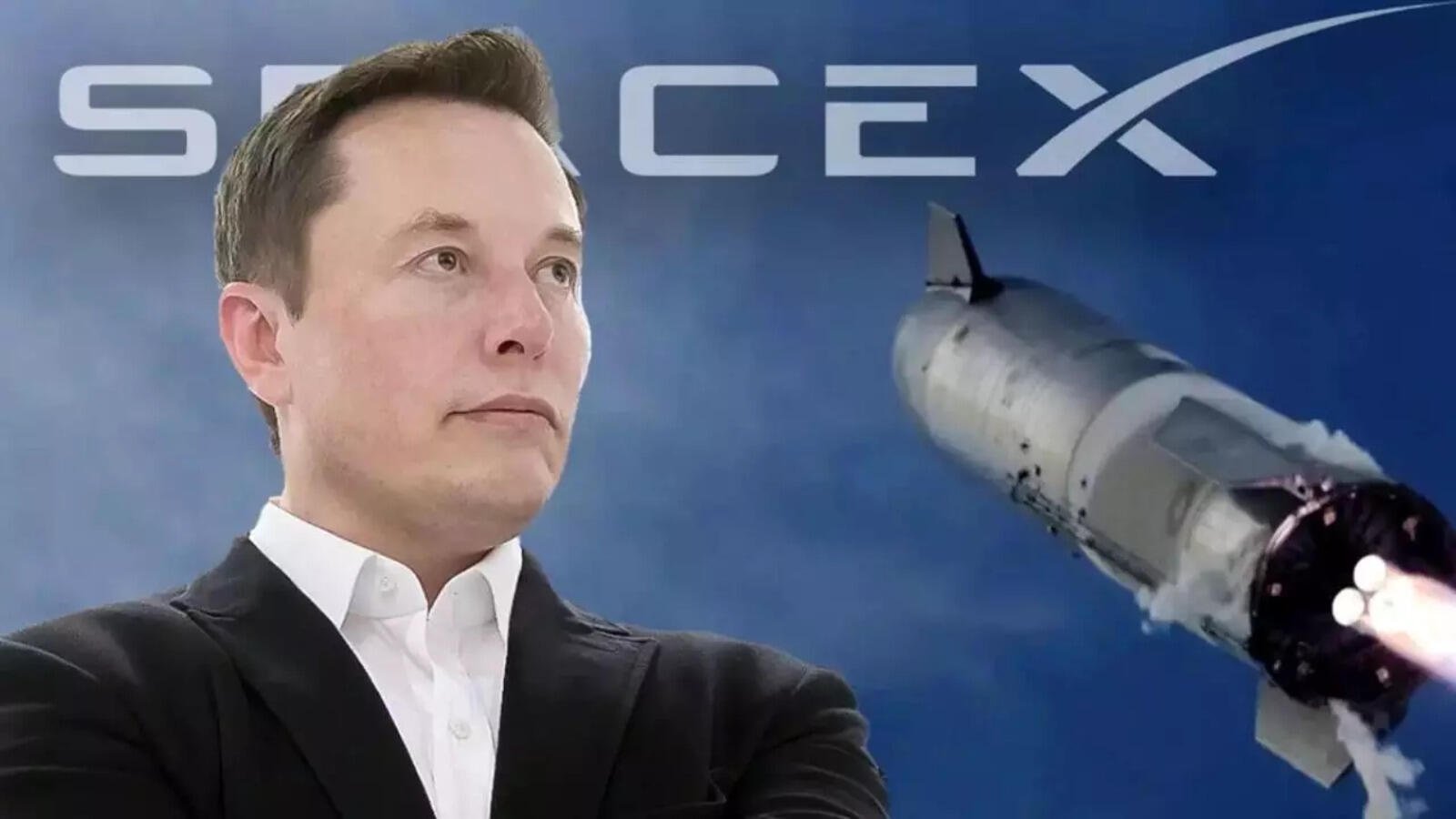
SpaceX has officially shattered global financial records by pricing the largest initial public offering (IPO) in human history. By selling 555.6 million shares at $135 each, Elon Musk’s rocket, satellite, and artificial intelligence company has raised a staggering $75 billion, valuing the enterprise at a monumental $1.77 trillion ($1.8 trillion on a fully diluted basis).
Trading under the ticker symbol SPCX on the Nasdaq, SpaceX instantly cements its position among the top 10 most valuable public companies on the planet.
To put this historic financial event into perspective, the sheer scale of the listing defies conventional market history across three distinct categories.
1. Shattering the Old Record
Until this launch, the title for the largest IPO in history belonged to the Saudi Arabian state-owned oil giant, Saudi Aramco, which raised $29.4 billion in 2019.
-
The 2.5x Multiplier: SpaceX didn’t just beat Aramco’s record; it raised more than two and a half times that amount.
-
The “Gap” Phenomenon: The financial cushion between SpaceX’s $75 billion haul and Aramco’s previous record is roughly $45.6 billion. That gap on its own is significantly larger than Aramco’s entire historic 2019 listing.
-
Room to Grow: The $75 billion figure could potentially scale even higher. SpaceX has granted underwriters an option to purchase an additional 83.3 million shares, which would push the total capital raised to roughly $86 billion if fully exercised.
2. Spawning the World’s First Trillionaire
The financial windfall from the IPO drastically reshapes the global wealth leaderboard, specifically for its founder.
-
The Massive Wealth Spike: The offering instantly expands Elon Musk’s personal fortune by an estimated $275 billion.
-
Breaking the Trillion-Dollar Ceiling: Depending on the financial publication’s exact tracking methodology, the IPO effectively pushes Musk into uncharted territory. Bloomberg positions him at roughly $970 billion at the offer price, while Forbes and Reuters estimate his net worth has officially crossed $1.1 trillion—making him the first trillionaire in history.
-
An Unprecedented Lead: To contextualize his wealth, the world’s second-richest person hovers around $300 billion. Musk is now worth more than three times his closest billionaire peer. Historically, only one other person (Oracle founder Larry Ellison) has ever even crossed the $400 billion mark.
3. A “Hopes-and-Dreams” Valuation vs. The Hard Numbers
While the enthusiasm surrounding the stock is undeniable, the IPO has drawn sharp critique from traditional market analysts who point out a glaring divergence between SpaceX’s market valuation and its actual balance sheet.
| Metric / Aspect | The Reality on the Books | The Infinite Horizon Projections |
| Current Financials (2025) | $18.7 Billion in revenue, accompanied by a $4.9 Billion net loss (driven heavily by massive infrastructure spending on AI data centers). |
Goldman Sachs: Projecting $474 billion in revenue by 2030. Morgan Stanley: Modeling $3.4 trillion by 2040. |
| Core Valuation Drivers | Hard assets like the Starlink satellite constellation and reusable Falcon/Starship hardware. | Unproven futuristic concepts: Orbital data centers, lunar factories, Martian colonies, and xAI’s Grok chatbot. |
| Market Sentiment | Skeptics like veteran short-seller James Chanos label it a “hopes-and-dreams IPO” riding purely on AI hype. | Optimists and tech bulls view it as a direct “Elon Musk Premium”—a bet on the man who revolutionized electric vehicles and space travel. |
What This Means for the Tech Landscape
The overwhelming demand for SpaceX—which was four times oversubscribed, pulling in more than $100 billion in individual retail orders alone—is a massive indicator of the market’s current fixation on physical AI infrastructure and space tech.
Wall Street and Silicon Valley are watching this debut incredibly closely. The performance of SPCX will serve as the critical litmus test for a wave of highly anticipated, blockbuster tech listings waiting in the wings—most notably OpenAI and Anthropic, both of which are expected to target valuations north of $1 trillion when they eventually debut.
